


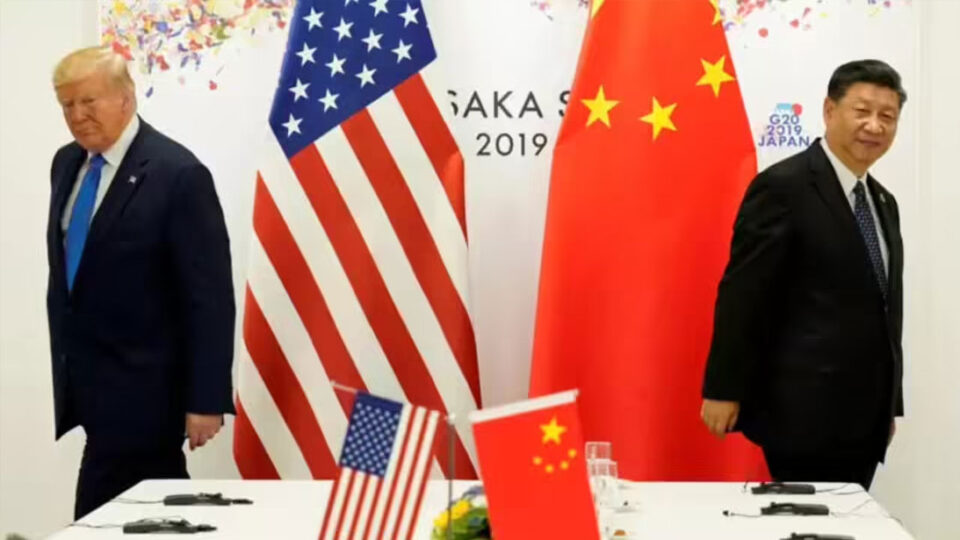
Trump Says China Can Continue Purchasing Iranian Oil Following Ceasefire Agreement
WASHINGTON – Former U.S. President Donald Trump stated on Tuesday that China may continue purchasing oil from Iran following a ceasefire agreement between Israel and Iran. However, the White House later clarified that the announcement does not indicate any official easing of U.S. sanctions.
“China can now continue to purchase oil from Iran. Hopefully, they will be purchasing plenty from the U.S., also,” Trump wrote on Truth Social, just days after he ordered strikes on three Iranian nuclear sites.
A senior White House official explained that Trump was highlighting Iran’s decision not to close the Strait of Hormuz—a critical oil route—an action that could have affected global oil supply, particularly for China, which is Iran’s largest oil customer.
“The president continues to urge China and all nations to prioritize importing American oil over Iranian oil, in accordance with U.S. sanctions,” the official added.
Impact on Oil Prices and Sanctions Policy
Following the ceasefire and Trump’s remarks, oil prices fell by nearly 6% on Tuesday, as markets interpreted the situation as a possible softening of restrictions on Iranian oil.
Any perceived relaxation would represent a shift from Trump’s previously stated “maximum pressure” policy aimed at reducing Iran’s oil exports to zero over concerns about its nuclear activities and regional influence.
During his previous term, Trump imposed multiple rounds of sanctions targeting Chinese independent refineries and port operators involved in buying Iranian oil.
Scott Modell, a former CIA officer and current CEO of Rapidan Energy Group, commented: “President Trump’s remarks could signal a return to lighter enforcement of Iran-related sanctions.”
Although Trump has the authority to suspend or waive sanctions imposed by executive orders or legislation, Modell said it’s unlikely he would do so before upcoming U.S.-Iran nuclear negotiations. The sanctions provide key leverage, especially as Iran demands permanent relief in any future agreement.
Jeremy Paner, a partner at law firm Hughes Hubbard & Reed, noted that suspending oil-related sanctions would involve a complex interagency process. “The U.S. Treasury would need to issue licenses, and the State Department would have to process waivers, both requiring Congressional notification,” he explained.
Limited Market Reaction from Asia
Oil traders and analysts across Asia expressed skepticism about the immediate impact of Trump’s comments. Currently, Iranian oil accounts for approximately 13.6% of China’s imports, largely due to its discounted prices, which are attractive to independent refiners. U.S. oil, in contrast, makes up just 2% of Chinese imports, further limited by a 10% tariff imposed by Beijing.
China has consistently opposed what it considers “unilateral and illegal” U.S. sanctions. The Chinese embassy in Washington did not respond to a request for comment.
Increased Chinese imports of Iranian oil could potentially strain relations with Saudi Arabia, a key U.S. ally and the world’s largest oil exporter.
Despite previous tough rhetoric, experts note that actual enforcement has varied. “This year, Trump has shown strength by targeting Chinese firms involved in Iran’s oil trade,” said Modell. “But the pressure applied has been more symbolic than substantial.”
State Department spokesperson Tammy Bruce emphasized the administration’s commitment to Trump’s direction, but offered limited details: “We’re focused on ensuring that President Trump’s vision moves forward. The full strategy will unfold in time.”
More developments are expected as global oil dynamics evolve following the ceasefire and renewed focus on sanctions enforcement.
