


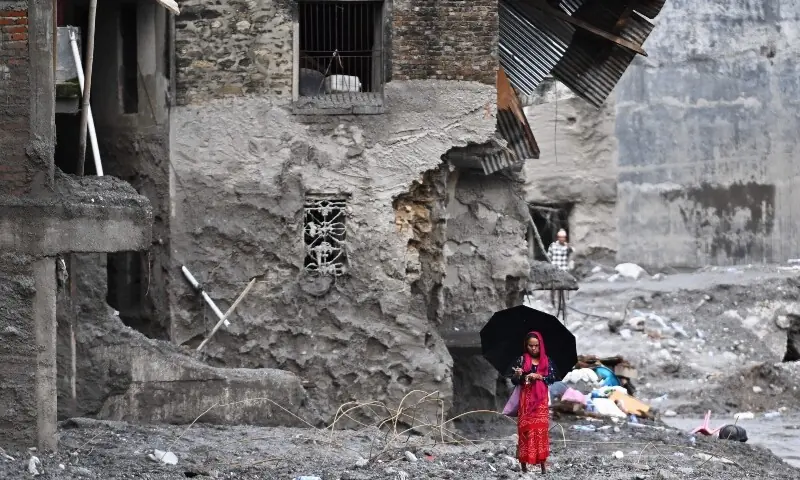
Nepal-China Flood Death Toll Crosses 1,000 as Nepal Calls for Climate Action
The death toll from severe flooding and related disasters along the Nepal-China border has crossed 1,000, according to authorities, as rescue teams continue operations in remote areas.
Nepal’s disaster management authorities reported at least 987 deaths, while Chinese state media confirmed 16 deaths in Tibet. The combined toll has reached 1,003.
Rescue efforts have entered their seventh day, with thousands of people still reported missing. Nepal has recorded 3,916 missing people, while authorities in China have reported another 546 missing.
Foreign nationals account for hundreds of those missing in Nepal. Officials said 583 foreigners from more than 30 nationalities remain unaccounted for. In China, 261 foreigners from 23 countries are also reported missing.
Indian nationals and people of Indian origin make up a significant portion of those missing in Nepal. New Delhi has reported 275 Indian citizens and 128 people of Indian origin among the missing.
Authorities in India’s Uttar Pradesh province have also recovered 17 bodies from rivers flowing from Nepal. Identification efforts are underway, and these deaths have not been included in the official flood toll.
Nepal Calls for Greater Climate Action
Nepal’s Prime Minister Balendra Shah has described the disaster as an extraordinary event and called for stronger international action on climate-related risks.
Shah said the flooding in the Bhote Koshi River area of Rasuwa was linked to a major Himalayan event involving snow and ice. He stressed that Nepal and other countries in the Himalayan region need to remain prepared as climate-related risks increase.
Scientists have warned that rising global temperatures are accelerating the melting of glaciers across the Himalayas. Changes in the region’s mountain environment can increase the risk of floods and other hazards.
Shah said Nepal should raise the issue internationally and seek greater attention and support for countries facing the effects of climate change.
The wider Himalayan and Hindu Kush mountain systems provide water to hundreds of millions of people living in mountainous areas and major river valleys across South and Southeast Asia.
Rescue Operations Continue
Rescue teams in Nepal are working to reach isolated communities and areas affected by the flooding. Temporary bridges have been constructed to improve access to remote locations, while teams are also searching damaged hydropower facilities.
Authorities said more than 11,000 people have been rescued across the affected areas. Electricity and communication services have also been restored in some locations.
Road access to Nuwakot, one of the hardest-hit districts, has improved, allowing emergency teams to deliver relief supplies and continue rescue operations.
Police officials said search teams were reaching previously inaccessible areas as rescue and recovery efforts continued.
Prime Minister Shah said international assistance worth more than $42 million had been received following the disaster, with further support expected.
Neighbouring India and China are also assisting Nepal with relief and rescue operations, including efforts to restore access to affected communities.
The disaster has placed additional pressure on Nepal’s limited resources and highlighted the challenges faced by Himalayan communities as extreme weather and climate-related risks continue to increase.
