


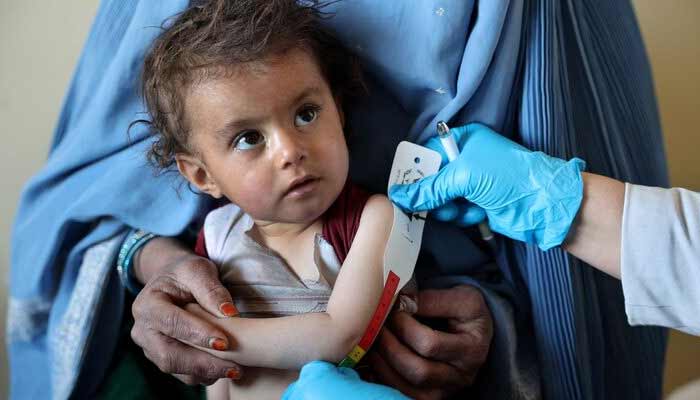
UN Warns of Severe Malnutrition Affecting 1 Million Afghan Children
The United Nations has raised concerns over a worsening nutrition crisis in Afghanistan, with around 1 million children experiencing severe acute malnutrition that requires urgent treatment.
According to UNICEF, approximately 3.7 million children across Afghanistan are suffering from wasting, a condition associated with acute malnutrition.
UNICEF Afghanistan Country Representative Tajudeen Oyewale said the most severe cases require immediate medical attention and warned that delays in treatment could put children’s lives at serious risk.


Young Children Among the Most Affected
UNICEF said infants and young children account for a significant proportion of severe malnutrition cases.
Nearly 40% of children admitted to hospitals with severe wasting and related medical complications are under six months old, according to the agency.
Children under the age of two account for more than 80% of severe acute malnutrition cases in the country.
Oyewale said malnutrition is contributing significantly to health risks among very young children.
More Children Seeking Treatment
Afghanistan has experienced repeated food and nutrition challenges over the past several decades, while economic difficulties have added to pressure on vulnerable communities.
UNICEF reported that more than 500,000 children have been admitted to hospitals so far this year for moderate or severe wasting and other high-risk nutrition conditions.
The number of cases has also increased compared with last year. In July 2025, around 6,000 cases were recorded, while July 2026 saw more than 8,000 cases, representing an increase of roughly one-third.
Hospitals Facing Growing Pressure
The rising number of patients is placing additional pressure on healthcare facilities in several parts of Afghanistan.
Oyewale said some hospitals in southern Afghanistan are treating several severely malnourished children for every available bed.
UNICEF has called for faster access to treatment and continued support for nutrition and healthcare services as the country faces increasing demand for assistance.
The UN agency’s warning highlights the need for sustained efforts to provide vulnerable children with timely medical and nutritional care.
