


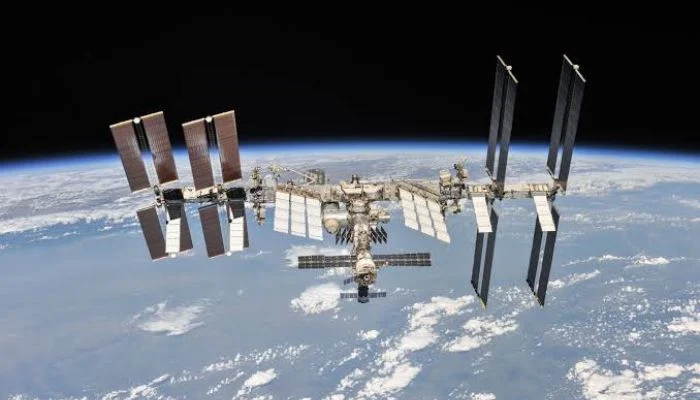
NASA Plans Controlled Deorbit of International Space Station by 2030
NASA is preparing for the retirement of the International Space Station (ISS), with the massive orbital laboratory expected to be brought down in a controlled manner after the end of its operational life.
The space agency has selected SpaceX to develop and deliver a US Deorbit Vehicle that will help guide the station safely back into Earth’s atmosphere. NASA’s current plan is designed to ensure that the remaining structure reaches a remote, unpopulated area of the ocean rather than falling uncontrolled toward populated regions.
Why Is the ISS Being Retired?
The ISS has supported continuous human activity in low Earth orbit for more than two decades. However, NASA and its international partners have committed to operating the station through 2030 as they prepare for the next phase of space exploration and research.
The station’s primary structure has a limited technical lifetime because of long-term exposure to orbital thermal cycles and the stresses caused by spacecraft arriving and departing from the facility.
NASA says a controlled deorbit is safer than allowing such a large structure to naturally fall from orbit.
SpaceX Developing Deorbit Vehicle
NASA selected SpaceX in 2024 to develop the US Deorbit Vehicle. The contract has a potential value of approximately $843 million, excluding the future launch service.
The vehicle will provide additional propulsion capability to help control the station’s final descent. NASA expects the vehicle to be based on SpaceX’s Dragon spacecraft, with modifications designed specifically for the ISS deorbit mission.
The controlled re-entry is expected to break the station apart as it passes through the atmosphere. Most of its hardware should burn up or vaporize, while some heavier components could survive and fall into a designated uninhabited ocean area.
Does the ISS Retirement Mean the End of Space Research?
The retirement of the ISS does not mean that microgravity research will end.
NASA is working to shift many of its low-Earth-orbit activities to commercially operated space stations. The agency plans to purchase research and other services from private companies instead of relying entirely on a government-owned orbital laboratory.
NASA is supporting the development of several commercial space station concepts, including projects involving companies such as Axiom Space and other industry partners. The goal is to maintain access to low Earth orbit for scientific research, technology demonstrations and other activities after the ISS is retired.
ISS Has Supported Thousands of Experiments
The International Space Station has served as an important research platform since its assembly began in the late 1990s.
NASA says researchers have conducted more than 3,300 experiments aboard the station, covering areas such as biology, human physiology, physical sciences, Earth science and technology development.
The microgravity environment allows scientists to conduct experiments that are difficult or impossible to reproduce under normal conditions on Earth.
Commercial Space Stations Could Take Over
NASA’s long-term strategy is to maintain a continuous human presence in low Earth orbit through commercially owned and operated facilities.
The agency has been working with private companies to develop these new destinations, with the aim of having commercial platforms ready around the time the ISS reaches the end of its operational life.
Under this model, NASA would become one of several customers using commercial stations, while private companies could also provide services to other organisations and researchers.
A New Chapter for Human Spaceflight
The ISS retirement will mark the end of one of the longest-running international projects in space, but NASA’s plans indicate that research in low Earth orbit is expected to continue through new commercial platforms.
At the same time, the agency is focusing more resources on future missions involving the Moon and Mars. The transition from the ISS to commercial stations is intended to preserve access to microgravity research while supporting a broader shift in human space exploration.
