


Pakistan Auto Sales Drop Sharply in August Amid EV and Hybrid Tax Uncertainty
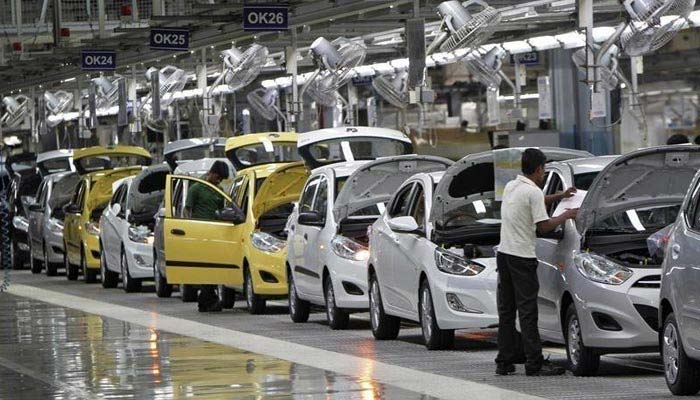
Pakistan’s automobile industry recorded a significant month-on-month decline in production and sales during August 2026, with uncertainty surrounding taxes on hybrid and electric vehicles affecting both manufacturers and potential buyers.
Data released by the Pakistan Automotive Manufacturers Association (PAMA) showed notable declines across several major vehicle categories compared with July.
Passenger Car Production and Sales Decline
Passenger car production fell by 23% month-on-month, dropping from 17,307 units in July to 13,267 units in August.
Sales also declined by 20%, falling from 17,216 units in July to 13,717 units in August.
The jeeps and pickups segment recorded an even sharper slowdown. Production decreased by 40%, from 4,361 units to 2,636 units, while sales declined by 29%, from 2,602 units to 1,841 units.
Farm tractor production fell by 23%, while sales decreased by 15% during the same period.
Auto Policy Delay Creates Uncertainty
PAMA Director General Razi-ur-Rahman attributed the slowdown to continued uncertainty following the expiry of the Automotive Industry Development and Export Plan (AIDEP) 2021-26 in June.
According to him, the absence of a new policy framework has created uncertainty for the automobile industry, particularly regarding the sales tax treatment of hybrid, plug-in hybrid and range-extended electric vehicles.
The uncertainty has reportedly encouraged consumers to delay vehicle purchases in anticipation of possible changes in prices and taxation under the upcoming policy.
PAMA has urged the government to announce the next automotive policy as soon as possible, warning that prolonged uncertainty could affect manufacturers, consumers and government tax revenues.
Two-Month Performance Shows Recovery
Despite the sharp monthly decline, the automobile industry posted considerable year-on-year growth during the first two months of fiscal year 2026-27.
Passenger car production increased by 36%, while sales jumped 80% compared with the same period last year.
Commercial vehicles, trucks and buses also recorded strong growth, with production increasing by 84% and sales rising by 73%.
Two- and three-wheelers recorded 29% year-on-year growth in both production and sales.
Tractor sales increased by 5%, although production declined by 17% as the segment continued to adjust following the end of a government subsidy program.
Major Automakers Report Mixed Results
Pak Suzuki remained a leading player in the market, with the Suzuki Alto continuing to rank among the country’s top-selling cars. Suzuki motorcycles also recorded healthy demand.
The company discontinued two variants of the 1,000cc Cultus, leaving the higher-end variant as the remaining option. Suzuki also expanded its lineup with the Fronx compact SUV, while the Swift continued to perform in line with expectations.
Indus Motor Company saw its sales return to more normal levels in August after an unusually strong July. The Fortuner and IMV lineup continued to contribute steadily to the company’s performance.
Honda Atlas Cars maintained its position in the sedan segment. However, demand for the HR-V was affected by uncertainty surrounding hybrid vehicle taxation following the discontinuation of the BR-V earlier this year.
Hyundai Nishat Motors also continued to await greater clarity on taxation for its hybrid and plug-in hybrid models. Meanwhile, the relaunched Elantra recorded strong demand, with production and sales nearly doubling both month-on-month and year-on-year.
Industry Seeks Early Policy Clarity
PAMA said the broader year-on-year improvement was supported by easing inflation, better access to credit and a low comparison base from previous years.
However, overall industry volumes remain below the levels recorded during fiscal year 2022.
Industry representatives are now calling for the government to finalize the next automotive policy without further delay, saying greater clarity could help manufacturers plan production and encourage consumers to resume vehicle purchases.
