


Gen Z Protests Challenge Modi Government as Unrest Grows Across India
India is witnessing a growing wave of youth-led protests, with demonstrations against the government of Prime Minister Narendra Modi gaining momentum across the country. The unrest has raised questions about the ruling Bharatiya Janata Party’s (BJP) political standing, particularly among younger voters.
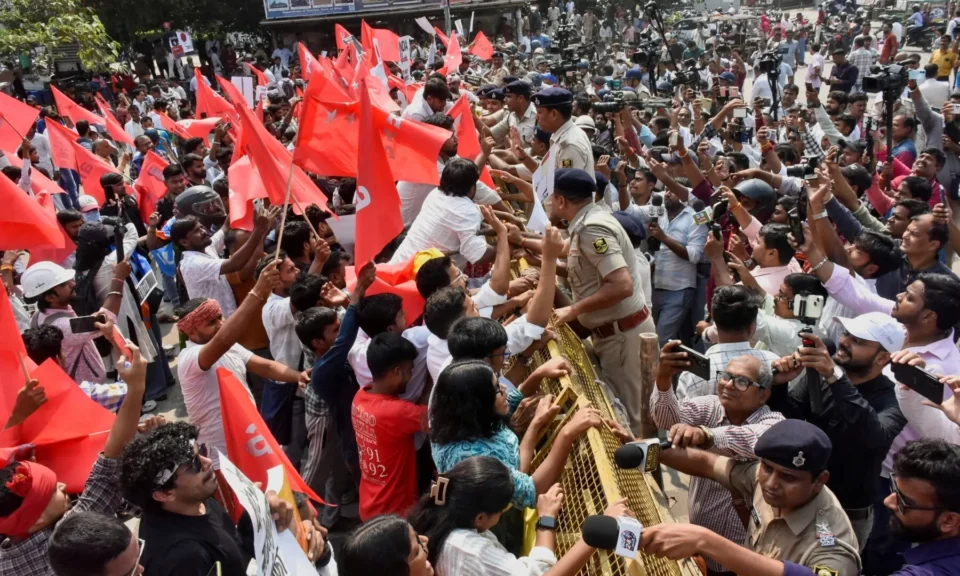
According to the independent Armed Conflict Location and Event Data (ACLED) Project, protests in India during 2026 could exceed levels recorded in any year of the past decade. Demonstrators have gathered in New Delhi and other locations, confronting police barricades and demanding accountability from government institutions.
The demonstrations reflect growing dissatisfaction among sections of the population over employment opportunities, alleged irregularities in recruitment examinations, women’s safety and concerns about the independence of electoral institutions.
Although the protests present a challenge for Modi’s government, the administration remains in power, and India’s next general election is not scheduled until 2029.
Election Dispute Becomes a Focus of Protests
Recent demonstrations have centred on demands for the resignation of Chief Election Commissioner Gyanesh Kumar over revisions to voter lists. Opposition parties and protest organisers allege that the changes favour the BJP and have influenced the outcomes of recent state elections.
The BJP, the government and the Election Commission have rejected the allegations. The ruling party maintains that its electoral victories reflect Modi’s popularity and the country’s economic performance.
Beyond the election dispute, the demonstrations have become a platform for broader concerns about governance, employment and access to opportunities.
Political activist Yogendra Yadav, who has participated in the protest movement, described the demonstrations as a sign that more people are willing to speak out against the government.
The BJP and the federal government declined to comment on the issues raised in the Reuters report.
Youth Unemployment Fuels Public Discontent
Employment has emerged as one of the central concerns driving the protests. Although India has recorded substantial economic growth during Modi’s time in office, many young people continue to face difficulties finding stable jobs.
Government data cited in the Reuters report put unemployment among Indians aged 15 to 29 at 9.9 per cent in 2025. Research from Azim Premji University’s State of Working India 2026 report also highlighted significant joblessness among young graduates.
According to the research, unemployment among graduates aged 15 to 25 was nearly 40 per cent, while approximately one in five graduates aged 25 to 29 remained unemployed.
The figures have intensified debate over whether economic growth is translating into sufficient employment opportunities for young people entering the workforce.
Protesters have also raised concerns about examination paper leaks, arguing that irregularities in recruitment and entrance tests undermine the prospects of students who spend years preparing for competitive examinations.
In May, the cancellation of examinations for national medical colleges following reported paper leaks triggered further anger among students and families.
A Youth-Led Movement Gains Visibility
The protests have received additional momentum from the Cockroach Janta Party (CJP), a youth-led movement that reportedly developed from online satire into a broader campaign in June.
The movement emerged after a controversial remark by India’s chief justice comparing unemployed people to cockroaches. Its organisers have since used social media and public demonstrations to draw attention to unemployment and other grievances.
Mobile phone recordings, independent digital news outlets and online platforms have helped spread footage of the demonstrations. Activists including CJP founder Abhijeet Dipke and left-wing campaigner Neha Bora have gained visibility through their involvement in the movement.
Opposition parties have also joined demonstrations, with Congress leader Rahul Gandhi and supporters participating in protests over electoral issues.
The growing public mobilisation has prompted comparisons with youth-led movements in neighbouring Bangladesh and Nepal, where protests contributed to major political changes. However, analysts caution that India’s political conditions differ and that the consequences of the current demonstrations remain uncertain.
Concerns Over Governance and Social Issues
In addition to unemployment, protesters have expressed dissatisfaction over women’s safety, alleged corruption, examination irregularities and the treatment of religious minorities.
Some demonstrators have accused the government of prioritising religious and divisive political issues over employment and other public concerns. The government has rejected allegations of discrimination, with Modi maintaining that his administration works for all Indians.
The authorities have also faced criticism over their handling of demonstrations. Police have denied allegations of mistreating protesters and said officers followed established procedures during detentions.
Despite the reported use of barricades and security personnel to control crowds, young demonstrators have continued to participate in rallies, reflecting the intensity of their concerns.
Upcoming Elections Could Test Modi’s Support
While India’s next general election is still nearly three years away, political developments in the coming months could offer an indication of changing voter sentiment.
Uttar Pradesh, the country’s most populous state, is scheduled to hold elections in early 2027. The contest could become an important test of the BJP’s support amid the current wave of demonstrations.
However, political analysts say it is too early to determine whether the protests will translate into significant electoral losses for the ruling party.
For now, the demonstrations highlight the growing importance of employment, electoral transparency and public accountability in India’s political debate. Whether the youth-led movement can sustain its momentum and influence future election results remains uncertain.
