


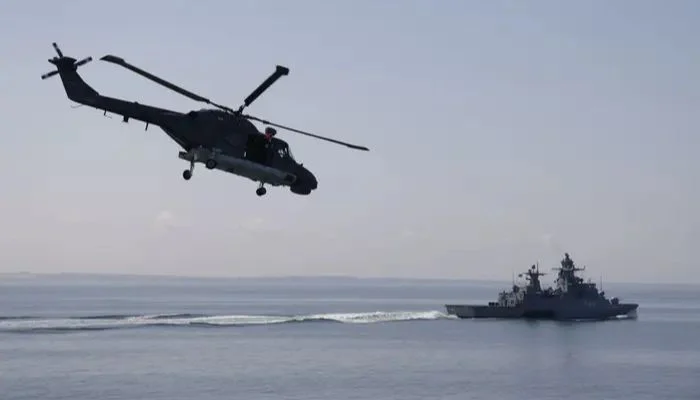
Russian Warship Fires Flares Near Danish Military Helicopter in Baltic Sea
Tensions between Russia and NATO have increased after a Russian frigate fired two flares toward a Danish military helicopter operating over international waters in the Baltic Sea.
The incident occurred on Monday while a Danish Air Force Fennec helicopter was carrying out a routine surveillance mission involving a Russian naval vessel.
According to Danish officials, one of the flares passed within only a few metres of the aircraft. Denmark said there was no prior radio warning from the Russian ship.
Denmark Summons Russian Ambassador
Danish Defence Minister Jeppe Bruus said the incident was unusual and raised concerns about the risks involved.
Denmark subsequently summoned Russia’s ambassador in Copenhagen over the confrontation.
Danish officials described the incident as dangerous, while Prime Minister Mette Frederiksen said it was part of broader concerns surrounding Russian activities involving European countries.
Russia has rejected Denmark’s account of events.
Russia Blames Danish Helicopter
Russian Ambassador Vladimir Barbin accused Danish military helicopters of carrying out what Moscow described as dangerous manoeuvres near Russian warships.
Russia said the Danish helicopter’s actions were provocative and that it was investigating the incident. Moscow has also referred to previous encounters involving Danish aircraft and Russian naval vessels.
The two sides therefore have different accounts of what led to the incident.
Could the Incident Trigger NATO Article 5?
The incident has raised questions about Article 5 of the NATO treaty, which provides for collective defence if a member country suffers an armed attack.
However, Article 5 is not automatically activated by every military confrontation involving a NATO member.
NATO states that whether an incident constitutes an “armed attack” must be assessed on a case-by-case basis. If Article 5 applies, each NATO member is required to assist the ally concerned by taking whatever action it considers necessary. That assistance does not necessarily have to involve military force.
Denmark has not invoked Article 5 over the Baltic Sea incident. Danish Defence Minister Bruus said the situation was being taken seriously but that the country was not seeking Article 5 consultations at this stage.
What Does Article 5 Actually Mean?
Article 5 states that an armed attack against one or more NATO members in Europe or North America is considered an attack against all members.
However, each ally decides what action it considers necessary in response. NATO explains that this can include military assistance but is not limited to the use of armed force.
The alliance has formally invoked Article 5 only once in its history, following the September 11, 2001 attacks against the United States.
Baltic Sea Remains a Sensitive Region
The latest confrontation comes amid heightened security concerns in the Baltic region, where NATO members operate near Russian military and naval forces.
The incident involving the Danish helicopter is being closely watched because of the potential risks of encounters between military aircraft and ships operating in the same area.
For now, Denmark has responded through diplomatic channels rather than invoking NATO’s collective-defence provision.
