


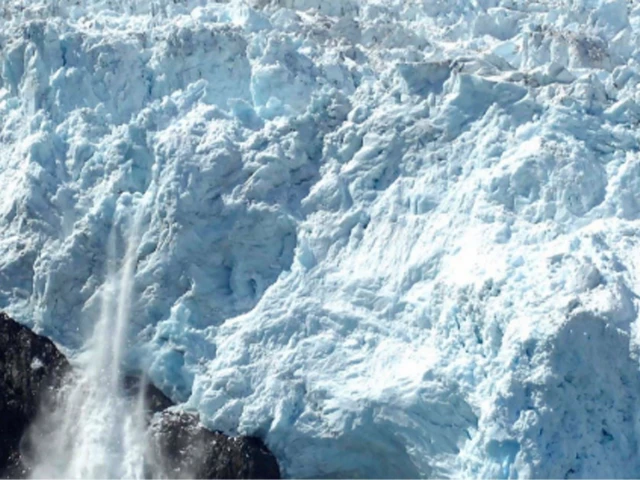
Glacier Loss Rate Rises to 4.9% in Karakoram Region
PESHAWAR: The rate of glacier area loss in Pakistan’s Karakoram region increased from 3.2% during the 1990s to 4.9% between 2010 and 2020, according to officials who briefed the Senate Standing Committee on Climate Change.
The committee was told that the overall area covered by Karakoram glaciers declined by about 12% between 1990 and 2020, highlighting the challenges associated with monitoring and managing changing glacier conditions.
Officials also reported that Pakistan has 115 potentially dangerous glacial lakes, with 105 of them having become unfrozen as of August 5.
However, authorities noted that accurate information on glacier melting remains limited because monitoring glaciers requires expensive equipment and specialised resources.
Federal Minister for Climate Change and Environmental Coordination Dr Musadik Malik told the committee that glacier melt and flooding are separate issues and therefore require different approaches.
He explained that while dams can play a role in flood management, they cannot prevent glaciers from melting. Glacier-related disasters can also involve the movement of land and terrain, making them more complex than conventional water-flow events.
The minister said the government is examining digital twin technology to improve the modelling and assessment of climate and glacier-related risks. He also highlighted the need for a dedicated digital laboratory.
According to Malik, glaciers across the region are estimated to be disappearing at a rate of around 9%. He said satellite technology is increasingly being used to collect information from areas where traditional monitoring is difficult.
Monitoring towers have also been installed at locations where data was previously unavailable, he added.
Malik stressed the need for government departments to share information through a coordinated system rather than waiting for formal requests. He said a committee formed by the prime minister under the Ministry of Defence is working to bring relevant institutions together.
A virtual platform has already been developed to help integrate available information, according to the minister.
He explained that different institutions currently handle various aspects of glacier, water, weather and disaster monitoring. The Ministry of Water Resources oversees glacier and water systems, while Wapda monitors snowfall and glacier melt through specialised equipment.
The Ministry of Defence is responsible for early warning systems, while Suparco manages satellite data and the National Disaster Management Authority (NDMA) handles disaster-related matters.
Malik said bringing these systems together could help Pakistan receive more timely and comprehensive information for responding to climate-related risks.
The minister also said the government is considering a new authority for civilian weather-related matters. The proposed body would also serve as a research and policy think tank for the Ministry of Climate Change and Environmental Coordination.
He added that proposals for the authority are expected to be finalised and presented to the federal cabinet soon.
