


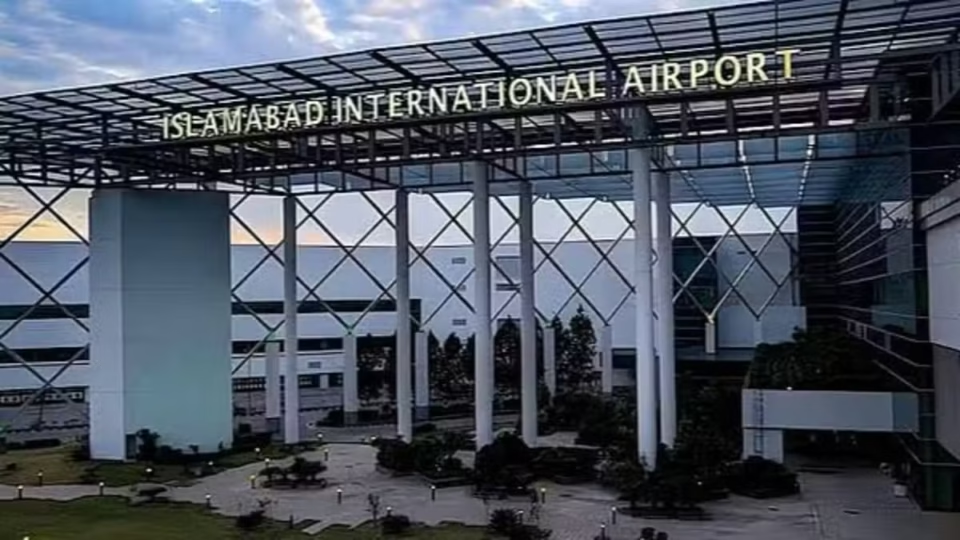
Islamabad International Airport to Add Three New Aviation Facilities
Pakistan is moving forward with plans to expand aviation infrastructure at Islamabad International Airport through the development of three major facilities aimed at strengthening aircraft maintenance, pilot training, and technical capabilities.
The upcoming projects are expected to support the country’s aviation sector, improve local engineering services, and create new employment opportunities.
First EASA-Standard Aircraft Maintenance Facility
One of the key projects is Pakistan’s planned European Union Aviation Safety Agency (EASA)-standard Maintenance, Repair and Overhaul (MRO) facility at Islamabad International Airport.
The project will be developed by private aviation company NORTEK with administrative support from the Pakistan Airports Authority (PAA) and regulatory oversight from the Pakistan Civil Aviation Authority (PCAA).
Once operational and approved under EASA standards, the facility is expected to provide maintenance and component support for Airbus A318, A319, A320, and A321 aircraft, helping expand Pakistan’s aircraft engineering capabilities.
Airblue to Build Modern Maintenance Hangar
Airblue is also constructing a new aircraft maintenance hangar at Islamabad International Airport that will meet international standards.
The hangar will provide:
- Protection for aircraft during maintenance
- Space for engineering teams and equipment
- Support for Airblue’s maintenance operations
- Potential maintenance services for other domestic airlines operating Airbus A320-family aircraft
The project is expected to reduce the need for sending aircraft abroad for maintenance work.
New Flight Training Center
In addition, Airblue is developing a Flight Training Center featuring:
- A full-flight simulator
- Modern classrooms
- Pilot type-rating programs
- Recurrent training for commercial pilots
The facility is currently expected to be completed by April 2027.
Supporting Pakistan’s Aviation Industry
These planned projects are intended to strengthen Pakistan’s aviation sector by improving local maintenance capabilities, expanding pilot training infrastructure, reducing dependence on overseas facilities, and supporting the development of a skilled aviation workforce.
