


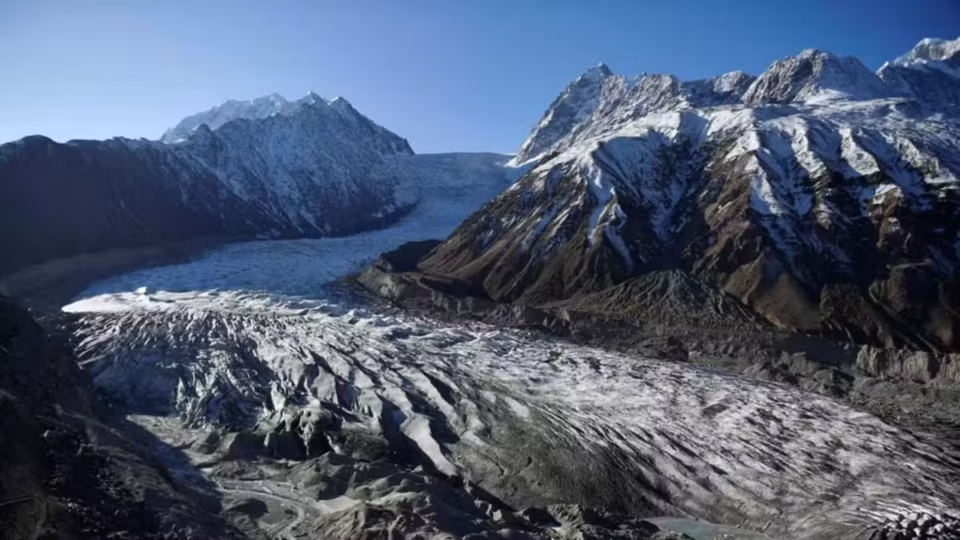
UN Warns Millions Face Rising Risk of Glacial Floods in Himalayan Region
Millions of people living near major rivers in the Himalayan region could face an increasing threat from glacial floods as rising temperatures accelerate the melting of glaciers, according to a senior United Nations official.
Kanni Wignaraja, Assistant Secretary-General at the UN and Regional Director for Asia and the Pacific at the United Nations Development Programme (UNDP), warned that the growing danger could affect communities, hydropower facilities and other infrastructure located along river systems.
Climate Change Increasing Glacier-Related Risks
Wignaraja said the scale of the region’s river systems makes it difficult for technology and emergency measures to prevent losses when large volumes of water are suddenly released from glacial areas.
Research published in 2020 identified 47 potentially hazardous glacial lakes across Nepal, China and India. However, the number of lakes considered dangerous is now believed to have increased.
Updated information compiled by UNDP and partner organizations in June indicates that millions of people could be exposed to risks associated with glacial flooding.
Recent Nepal Flood Highlights the Threat
The warning comes shortly after a severe flood in Nepal that followed the collapse of part of a glacier near Langtang Lirung mountain.
The collapse triggered a landslide, which sent a large surge of water down the Trishuli River and caused significant flooding in the valley.
The incident has renewed concerns about the vulnerability of communities located downstream from glaciers and glacial lakes.
What Causes Glacial Lake Outburst Floods?
Glacial lake outburst floods occur when large amounts of meltwater collect behind a natural barrier, such as ice, rock or sediment.
As water levels and pressure increase, the barrier can fail or overflow, releasing a sudden and potentially destructive flood downstream.
These events differ from direct glacier collapses, although both hazards can become more likely as temperatures rise and glaciers continue to lose ice.
Himalayan Communities Face Long-Term Challenges
According to UN officials, warmer temperatures can accelerate glacier melting while also destabilizing surrounding rocks and increasing pressure on natural barriers.
The geological characteristics of the Himalayan region may add another layer of risk. The mountains are relatively young and remain highly active, meaning earthquakes and other tectonic movements can contribute to glacier collapses or failures of glacial lake barriers.
Researchers have identified potentially dangerous glacial lakes across parts of the wider Hindu Kush-Himalayan region. The findings have raised concerns about the long-term safety of communities, roads, power facilities and other infrastructure located downstream.
