


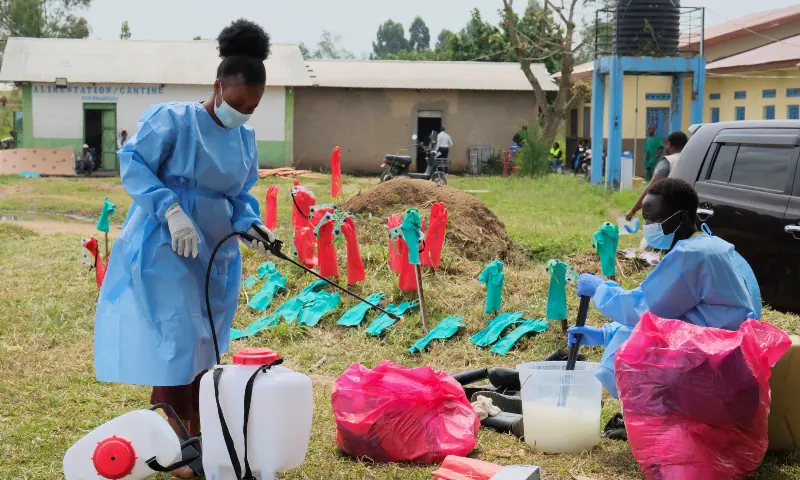
Congo Faces Resource Challenges as Ebola Response Efforts Continue Health Authorities Work to Strengthen Outbreak Response
Health officials and international aid organizations are working to expand Ebola response efforts in the eastern Democratic Republic of Congo as the outbreak continues to place pressure on healthcare systems and emergency services.
A month after the World Health Organization (WHO) declared the outbreak a public health emergency of international concern, authorities are focusing on improving disease surveillance, patient care, contact tracing, and community outreach.
According to health officials, more than 800 confirmed cases have been reported, prompting increased efforts from national and international partners to contain the spread of the disease.
Resource Constraints Remain a Key Challenge
Health workers on the ground say response teams are facing shortages of personnel, transportation, medical supplies, and infrastructure needed to support treatment and monitoring activities.
Officials from the Africa Centres for Disease Control and Prevention (Africa CDC) noted that reaching all identified contacts remains challenging in some areas due to logistical and operational difficulties.
Public health teams continue to expand monitoring efforts and strengthen local healthcare capacity to improve case detection and follow-up.
Government Expands Community Health Initiatives
The Congolese government says it has increased response activities by training and deploying community health workers to help identify potential cases and support public awareness campaigns.
Authorities report that thousands of community visits are being conducted to improve contact tracing and encourage early reporting of symptoms.
Health officials have also highlighted the importance of cooperation between local communities, healthcare workers, and international partners in supporting containment efforts.
International Organizations Call for Additional Support
Aid agencies and health experts say additional resources will be important for strengthening treatment facilities, transportation networks, and protective equipment supplies.
International organizations continue to coordinate with national authorities to improve access to medical resources and support frontline healthcare workers.
Public health experts stress that sustained funding and logistical support will be essential to maintaining response efforts and reducing the impact of the outbreak.
Focus on Preparedness and Public Health Measures
Health authorities continue to emphasize early detection, community engagement, and coordinated response measures as key tools in managing the outbreak.
The World Health Organization, Africa CDC, and humanitarian partners remain actively involved in supporting surveillance, healthcare services, and public health education programs across affected areas.
Officials say continued collaboration between governments, international organizations, and local communities will play an important role in strengthening the response and protecting public health in the months ahead.
