


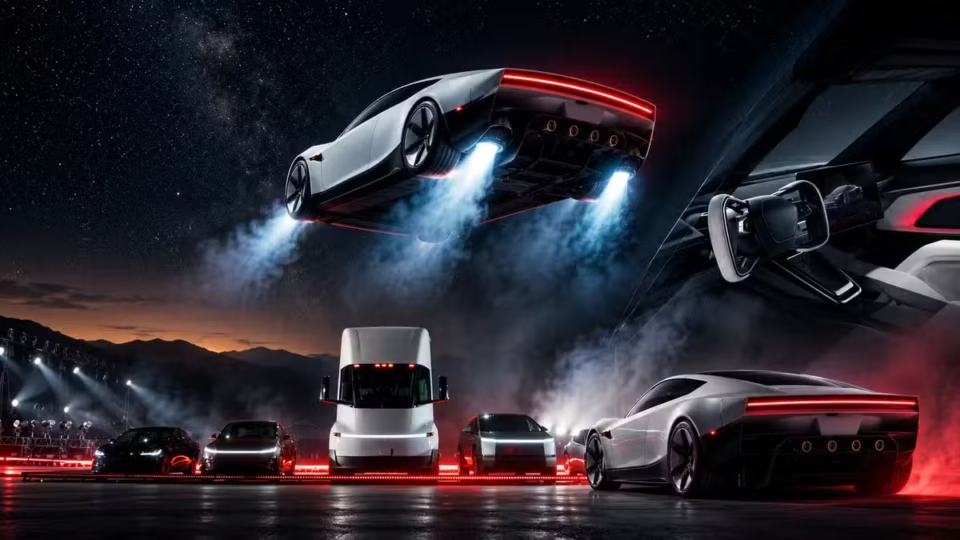
Tesla Unveils Flying Roadster Concept With Compressed-Air Thrusters
Tesla has showcased its long-awaited next-generation Roadster, highlighting a series of ambitious performance features, including brief aerial movements powered by compressed-air thrusters.
The electric sports car was demonstrated at an event in Waco, Texas, on October 15, 2026, nearly a decade after Tesla first announced plans for the next-generation Roadster. The demonstration featured the vehicle climbing a steep ramp, performing aerial maneuvers and showcasing an acceleration claim of 0 to 60 miles per hour in just 0.81 seconds.
The technology draws inspiration from SpaceX, the aerospace company founded by Tesla CEO Elon Musk. However, the flying capability comes with an important limitation: the version equipped with the full thruster system is not approved for public-road use.
Tesla is currently expected to begin production in 2028, although the final specifications and availability of the different versions remain important considerations for prospective buyers.
Tesla Roadster Demonstrates Brief Aerial Capability
During the event, Tesla demonstrated the Roadster climbing a specially designed ramp with the help of a suction system intended to maintain grip on the surface.
At the top of the ramp, the vehicle used its thrusters to perform an aerial maneuver before returning to the ground.
Another demonstration showed the Roadster briefly lifting off and passing over several Tesla vehicles, including the Cybertruck, Model 3, Model Y, Semi and Cybercab.
The demonstrations were conducted under controlled conditions. Tesla has not demonstrated sustained aircraft-style flight, meaning the vehicle should not be considered a conventional flying car.
The reported acceleration figure of 0.81 seconds from 0 to 60 mph is another headline-grabbing claim. Its practical significance will depend on the final production specifications and independently verified performance testing.
How Tesla’s Flying Roadster Technology Works
Unlike conventional aircraft, which use wings and aerodynamic lift, the Roadster’s proposed aerial capability relies on compressed-air thrusters inspired by aerospace technology.
According to the supplied report, the system includes 10 cold-gas thrusters connected to high-pressure compressed-air storage tanks. These thrusters can generate short bursts of force to lift or reposition the vehicle during controlled maneuvers.
The system reportedly uses approximately 600 litres of compressed-air storage and does not burn rocket fuel.
Tesla has also incorporated a fan-powered suction system beneath the vehicle. This system is designed to generate additional downforce and improve grip during extreme driving maneuvers.
Although the combination of suction and compressed-air propulsion represents an unusual approach to vehicle engineering, the aerial capability is intended for specialized use rather than ordinary road driving.
Tesla Plans Three Roadster Versions
The next-generation Roadster is described as having three configurations, each targeting a different level of performance.
Performance version: This model is designed primarily for road use, with two seats, active aerodynamic features and the proposed suction system.
Thrust version: This configuration focuses on extreme acceleration and incorporates rear cold-gas thrusters. It is described as a limited-release model.
Rocket version: The most specialized configuration reportedly features a single seat and a 10-thruster system capable of brief aerial movements. It is intended for restricted use and is not approved for public roads.
The three configurations reflect Tesla’s effort to distinguish a conventional high-performance electric sports car from versions equipped with more experimental propulsion technology. Final production details and regulatory requirements will be important factors in determining which features reach customers.
Interior and Performance Features
The Roadster’s cabin follows Tesla’s minimalist design approach, with a central touchscreen, sculpted seats and a yoke-style steering control.
Other reported features include steer-by-wire technology and a retractable rear wing intended to support the vehicle’s performance and aerodynamic characteristics.
The interior emphasizes driving performance and a simplified control layout rather than traditional luxury features.
However, the final production vehicle’s specifications, equipment and safety systems will need to be confirmed as Tesla moves closer to manufacturing.
Production Timeline and Road-Use Limitations
Despite the attention generated by its aerial demonstrations, the Roadster still faces important questions regarding production, safety, certification and real-world performance.
The version designed for public roads must meet applicable vehicle regulations, while the full-thruster configuration faces additional restrictions because it is not approved for ordinary road use.
Tesla’s expected 2028 production timeline also means buyers may need to wait before the final vehicle specifications and delivery arrangements become clear.
The Roadster’s proposed flying capability is an ambitious extension of electric vehicle technology, but its practical value will depend on how the technology performs beyond demonstrations and what features Tesla ultimately delivers in production models.
