


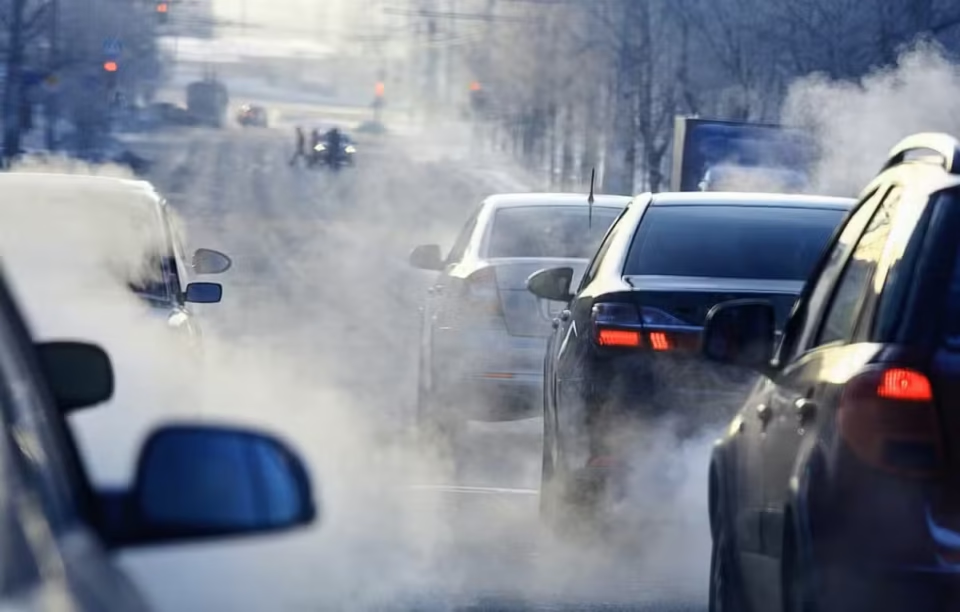
Punjab Steps Up Action Against Smoke-Emitting Vehicles Before Smog Season
The Punjab Environment Protection Agency (EPA) has directed its field teams to increase monitoring of vehicles that produce excessive smoke as the province prepares for the upcoming smog season.
The latest instructions focus particularly on heavy transport vehicles and other vehicles that release visible smoke or exceed permitted emission levels.
EPA Teams to Coordinate With Traffic Authorities
EPA Punjab field teams have been instructed to work closely with traffic and transport authorities to identify vehicles contributing to air pollution.
Officials will inspect vehicles producing excessive emissions and take action against those found violating environmental regulations.
The directives were issued during a meeting of EPA Punjab field officers chaired by Director General Environment Punjab Abdullah Nayyar Sheikh.
The meeting reviewed preparations for the pre-smog enforcement campaign and discussed measures to control major sources of pollution before air quality conditions worsen.
Focus on Major Sources of Air Pollution
Sheikh instructed field officers to remain active in their assigned areas, identify pollution hotspots and ensure that environmental regulations are followed.
According to officials, the EPA is adopting a strict approach toward visible smoke and excessive emissions.
The enforcement campaign will not be limited to vehicles. Authorities will also monitor other major sources of air pollution, including brick kilns, industrial units, construction activities and stone-crushing plants.
Brick Kilns and Industrial Units Under Watch
The EPA has directed that brick kilns must use compliant zig-zag technology. Facilities that fail to meet the required environmental standards may face action.
Industrial units exceeding permitted emission limits will also be monitored, with authorities instructed to take appropriate measures against violations.
Construction Dust to Receive Greater Attention
EPA field teams have also been asked to monitor activities that generate large amounts of dust.
These include construction projects, unpaved roads and areas where construction materials are stored. Officials will check whether materials are properly covered during storage and transportation.
Water sprinkling will also be encouraged or required at suitable locations to control dust and reduce its impact on air quality.
The enhanced enforcement campaign is part of Punjab’s preparations to address pollution levels ahead of the annual smog season.
