


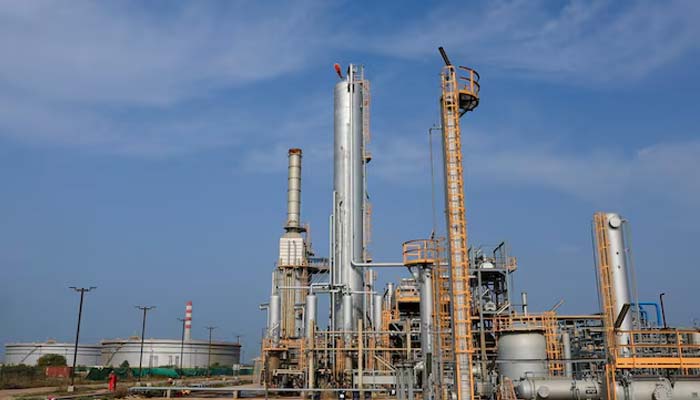
Pakistan to Sign Agreements With Five Refineries for $6 Billion Investment
Pakistan is expected to sign long-awaited agreements with five major oil refineries on Thursday, paving the way for more than $6 billion in planned investment to modernize ageing plants and increase domestic fuel production.
The agreements involve Pak-Arab Refinery Limited (PARCO), Pakistan Refinery Limited (PRL), National Refinery Limited (NRL), Cnergyico and Attock Refinery Limited (ARL).
A senior Petroleum Division official said the agreements are being finalized through discussions between the Petroleum Division and Inter-State Gas Systems (ISGS), with the signing expected to take place on Thursday.
Government Assigns ISGS Role in Refinery Agreements
The government has authorized ISGS to sign the agreements and supervise their implementation.
This responsibility was previously expected to be handled by the Oil and Gas Regulatory Authority (OGRA) under an earlier arrangement.
The planned refinery upgrades are aimed at improving the country’s ability to produce petrol and diesel locally and reducing dependence on imported petroleum products.
Upgraded Refineries Could Process More Crude
According to an ISGS official, the upgraded refineries would be capable of processing a broader range of crude oil supplies.
This could include crude from countries such as Iran and Russia, subject to Pakistan’s applicable laws and international sanctions.
Greater flexibility in crude sourcing could provide refineries with more options for securing feedstock once modernization projects are completed.
Industry Raises Concerns Over Financing
Despite the expected agreements, industry representatives have warned that signing contracts alone will not guarantee that the planned investments will move forward.
The refinery modernization programme could face challenges if changes to the financial incentive structure make the projects difficult for lenders to support.
Industry sources have raised concerns about replacing jointly controlled escrow accounts with government-controlled accounts for refinery incentives.
They argue that such a change could affect how funds are controlled, secured and ring-fenced, potentially creating additional challenges for securing financing.
Financial Close Seen as Key Milestone
Industry representatives have emphasized that the signing of agreements should be viewed as only the beginning of the modernization process.
The major test will be whether the projects receive financing approval from local and international lenders and successfully reach financial close.
Refinery upgrades require substantial capital investment, making a stable and lender-friendly financial framework important for moving the projects from agreements to actual construction and modernization work.
The Petroleum Division spokesperson did not respond to repeated requests for comment regarding the reported changes to the escrow arrangement for refinery incentives.
