


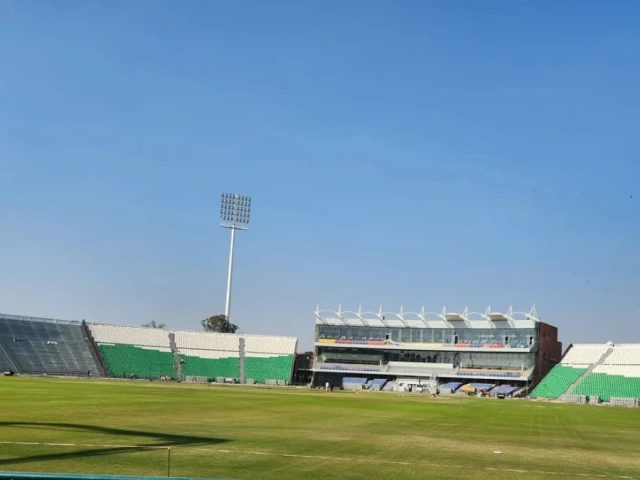
From Ten-Rupee Photos to Empty Grounds: How Pakistan Cricket Lost Its Fan Following
There was a time when watching domestic cricket in Pakistan meant packed grounds, excited crowds and fans waiting for hours to meet their favourite players.
For many cricket followers, those memories now feel like a different era. The popularity of domestic cricket has declined, while several national players no longer enjoy the same level of public attention they once received.
When Cricketers Were Household Names
After Pakistan’s 1992 World Cup triumph, cricket reached extraordinary levels of popularity across the country.
Players were treated as major celebrities, and even domestic matches attracted large crowds. Fans would travel to local grounds simply after hearing that a Pakistan team player was taking part.
One such memory comes from Karachi’s Bakhtiyari Youth Centre, where former Pakistan players Aaqib Javed and Aamer Sohail were playing for Allied Bank.
After the match, supporters gathered around the players. A photographer offered to take pictures with the cricketers for just Rs10, with the photographs available for collection later.
Those inexpensive photographs became lasting memories for fans who had the opportunity to meet their cricket heroes.
Domestic Cricket Losing Its Appeal
Pakistan’s domestic cricket structure has long been considered an important pathway for producing international players.
However, the connection between domestic cricket and the national team has weakened over the years. The recent return of major names to domestic competitions has highlighted how frequently leading players have stayed away from the first-class system.
Domestic cricket provides players with experience in longer formats and helps them develop skills required for Test cricket.
When players reach the national Test side without enough exposure to first-class cricket, adapting to the demands of the format can become more difficult.
The Gap Between Stars and Fans
Pakistan still has globally recognised cricketers, but the wider national squad does not always receive the same public attention as previous generations.
Babar Azam remains one of the country’s most recognised players, although his recent Test performances have not matched the standards associated with his earlier career.
The broader issue is that fans increasingly want consistent performances and victories before reconnecting emotionally with the national team.
Results Affect Public Interest
Pakistan’s cricket history includes major achievements such as winning the ODI World Cup, T20 World Cup and Champions Trophy.
In recent years, however, inconsistent results have affected the team’s relationship with supporters. Defeats against sides that were previously considered less established have added to concerns among fans.
As performances struggle for consistency, some supporters have simply stopped following every match as closely as they did in the past.
Players Must Rebuild Their Connection With Fans
The return of major players to domestic cricket is one part of rebuilding the system, but performances at international level remain crucial.
Players can regain public support through strong performances, competitive cricket and victories for Pakistan. Fan attention has historically followed success on the field.
The PCB also has a role in maintaining a strong domestic structure and ensuring that the pathway to international cricket remains competitive.
Pakistan Cricket Can Still Rebuild
The decline in public interest does not mean Pakistan cricket has reached the end of its journey.
The country has a long cricketing tradition and has produced some of the world’s most respected players. A stronger domestic system, better preparation and consistent international performances could help rebuild the connection between the team and its supporters.
Pakistan cricket’s past success remains part of the country’s sporting history. The challenge now is to create a new generation of performances that can inspire fans to return to the grounds and follow the national team with the same enthusiasm.
