


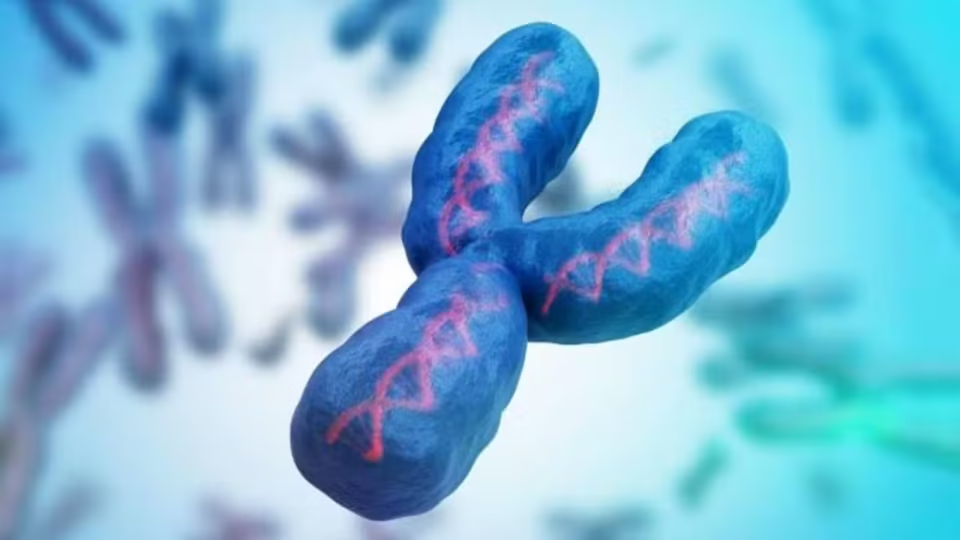
Study Finds Link Between Y Chromosome Loss and Cancer Risk in Men
A new study has identified a possible connection between the loss of the Y chromosome in men’s cells and the early development of cancer.
Researchers led by Dr. Dan Theodorescu at the University of Arizona Cancer Center found that age-related Y chromosome loss may create genetic changes in otherwise normal-looking tissue, potentially making it more vulnerable to cancer formation.
The findings were published in JCI Insights and could provide new information about how some cancers develop in men.
Y Chromosome Loss Found Near Tumours
Men typically have one X chromosome and one Y chromosome in each cell. According to the researchers, some cells can lose the Y chromosome as men age.
The study found that Y chromosome loss was sometimes present in tissue that appeared normal but was located close to cancerous areas. This suggests that the genetic change may occur during the early stages of cancer development.
Researchers analysed around 1,000 tissue samples from 405 men covering 11 major organs. Using automated fluorescent imaging, they examined more than 4.3 million cell nuclei and measured the balance between X and Y chromosomes.
Higher Loss Observed Closer to Cancer
The researchers also examined tissue samples collected during bladder cancer surgery.
Their analysis showed that Y chromosome loss increased progressively from normal tissue to early abnormal cells and then to cancerous tissue.
The change was particularly common in cancers involving the colon, rectum, esophagus, pancreas and lungs. Researchers also reported that tissues located closer to cancerous areas tended to show greater Y chromosome loss.
Potential Use in Future Cancer Detection
Dr. Theodorescu said the findings could eventually help doctors identify warning signs in biopsy samples, particularly in cases where a small cancerous area may not be captured in the sample.
The researchers believe the discovery could contribute to a better understanding of the biological changes involved in cancer development.
Further research will be needed to determine how Y chromosome loss contributes to cancer and whether it could eventually be used as a reliable tool for early detection or risk assessment.
