


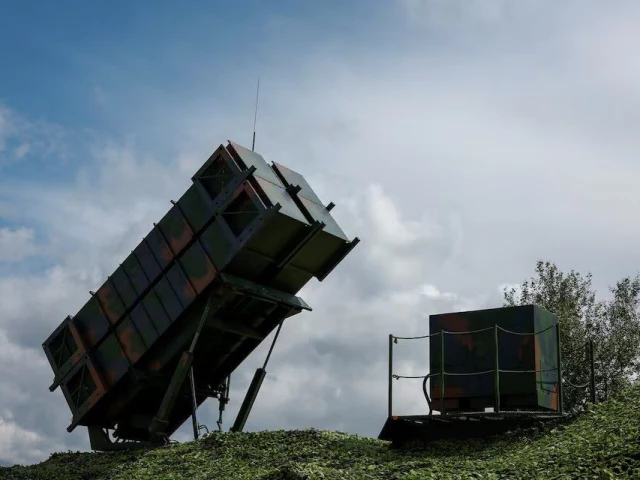
US Deploys Additional Patriot Systems to Protect Energy Facilities in Saudi Arabia and Qatar
The United States has deployed two additional Patriot air defense missile batteries to Saudi Arabia and Qatar to help protect key energy facilities, according to a report by Axios citing US and regional sources.
The deployments come amid preparations for the possibility of renewed US military operations against Iran.
According to the report, one Patriot battery was sent to Saudi Arabia last month to protect a major oil facility, while another was deployed to Qatar to help defend a natural gas facility.
The deployments are reportedly intended to reassure Saudi Arabia and Qatar that the United States would support the protection of their critical energy infrastructure in the event of renewed military action against Iran.
US President Donald Trump said Thursday that he was considering further military action if an agreement with Iran could not be reached.
Saudi and Qatari leaders had reportedly urged Trump earlier against launching a major attack that could include strikes on Iranian energy infrastructure. According to Axios, the two countries were concerned that such action could lead to retaliation against their own oil and gas facilities.
The report also said that Saudi Arabia’s approval would be important if the US wanted to use its airspace for large-scale military operations. Riyadh could seek additional assurances regarding the protection of its energy infrastructure.
A spokesperson for US Central Command declined to comment on the reported deployments.
Additional US Military Forces Heading to Middle East
The US is also reportedly moving additional military assets to the Middle East, including warships, fighter aircraft and troops.
According to Axios, the USS Theodore Roosevelt aircraft carrier and its strike group left San Diego on Sunday and are expected to reach the region around mid-November.
US officials have not yet determined whether the carrier will replace an existing deployment or increase the number of US carrier strike groups in the region.
The Makin Island Amphibious Ready Group, carrying thousands of Marines from the 13th Marine Expeditionary Unit, also departed for the region on Monday and is expected to arrive by the end of November.
Houthis Reportedly Claim Saudi Airstrikes
Meanwhile, Yemen’s Houthi movement said Saudi Arabia carried out airstrikes on Sanaa and several areas in the provinces of Saada, Taiz and Amran.
The Houthi-run SABA news agency reported that aircraft allegedly linked to Saudi Arabia targeted locations in the capital and the three provinces. The report did not provide independent details about casualties or damage.
Yemeni military officials separately said that 27 airstrikes targeted Houthi positions and gathering areas in Taiz province.
Saudi-led coalition spokesman Brigadier General Turki al-Maliki also said that Saudi air defenses intercepted drones and ballistic missiles launched toward Khamis Mushait and Jazan.
He further claimed that the Houthis had targeted the Taiba power station in Saudi Arabia’s Medina with a drone two days earlier.
Iran Calls for Normal Air Travel With Iraq
Iran has also called for the removal of restrictions affecting flights between Iran and Iraq and urged the restoration of regular air services.
Iran’s Foreign Ministry said Tehran respects Iraq’s sovereignty but believes that appropriate measures should be taken to resume normal flights between the two countries.
The ministry said the restrictions had affected passengers, including pilgrims, patients, students and business travelers.
Iran also emphasized the longstanding historical, religious and cultural ties between the two countries and called for transportation links to be managed through cooperation and mutual interests.
