


Heavy Rain and Strong Winds Disrupt Life in Rawalpindi and Islamabad
Waterlogging reported across low-lying areas as strong winds damage rooftops and house walls
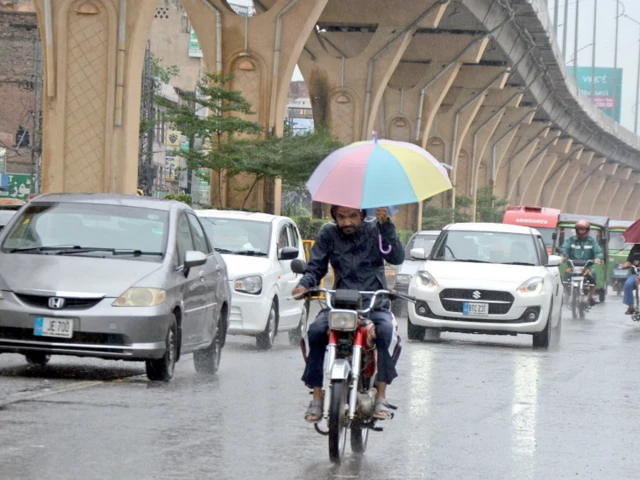
RAWALPINDI: Heavy rain accompanied by strong winds affected daily life in Rawalpindi and Islamabad on Monday, with several areas experiencing waterlogging and reports of damage to houses and rooftop water tanks.
The downpour, described as the first heavy rain of the winter season, continued for several hours and left roads and streets in low-lying parts of the twin cities under water.
Water accumulated to around one foot at several locations, including Saidpur Road, Rawal Road, Iqbal Road, Raja Bazaar, Saddar Road, Girja Road, Dhok Syedan Road and Pindora Road.
The situation also affected attendance at schools and colleges, while some people arriving at courts faced delays because of the difficult road conditions.
In Dhok Khabba, strong winds caused a large rooftop water tank to fall. The tank became suspended above the street by its water pipes and remained there for several hours, creating difficulties for pedestrians and motorists.
Another rooftop tank fell into a street in Millat Colony near Mukha Singh Estate.
Meanwhile, walls of two houses located near a rainwater drain in Fazalabad and Javed Colony collapsed during the rainfall.
Officials said water in many low-lying areas normally takes around four to five hours to recede.
Heavy rain also increased soil erosion along the banks of Nullah Leh. Although plans have previously been announced to construct concrete protective embankments along the waterway, work has yet to begin.
The rainfall brought a noticeable drop in temperature, providing relief from the recent heat. Many residents switched off air conditioners, while fans were operated at lower speeds.
The heavy showers also resulted in water accumulation at various locations across the twin cities. Rawal, Simly and Khanpur dams, which supply water to the area, were reported to have reached capacity, after which authorities decided to open their spillways.
PML-N city central leader Sheikh Asad Zahoor called for an inquiry into urban flooding, questioning why the problem continued despite major spending on drainage infrastructure.
Citizen Action Committee Chairman Malik Zaheer Awan also called for financial assistance for residents who suffered losses during flooding in the monsoon season.
Rain Increases Dengue Concerns
The rainfall has also raised concerns about mosquito breeding and seasonal illnesses.
WASA Rawalpindi deployed dewatering equipment in low-lying areas after the twin cities received around 20 to 33 millimetres of rain.
Rawalpindi District Health Officer Dr Jawad Zahid said stagnant water can create favourable conditions for dengue mosquitoes, particularly as temperatures move into the 22°C to 30°C range.
According to the health authorities, 27 dengue cases have been reported in Rawalpindi this season, while more than 191,468 potential mosquito breeding sites have been identified and eliminated.
Authorities have also registered more than 2,717 FIRs and sealed 678 premises over alleged violations of anti-dengue standard operating procedures.
Dr Jawad advised residents to remove standing water from rooftops, flowerpots, water containers and other areas around their homes.
Meanwhile, the National Disaster Management Authority reported that major rivers were flowing at normal levels. Nullah Leh was also reported to be at safe levels, measuring around five feet at Katarian and two feet at Gawalmandi.
However, the NDMA issued an urban flooding alert for Rawalpindi, Islamabad and Murree until September 30. The warning includes the possibility of flash flooding in seasonal streams across the Potohar region.
The Pakistan Meteorological Department has forecast further isolated heavy rainfall, prompting authorities to remain alert.
Public health expert Dr Adnan Khan also advised caution during the changing weather, saying sudden temperature fluctuations can contribute to seasonal illnesses such as influenza, typhoid and other viral infections.
