


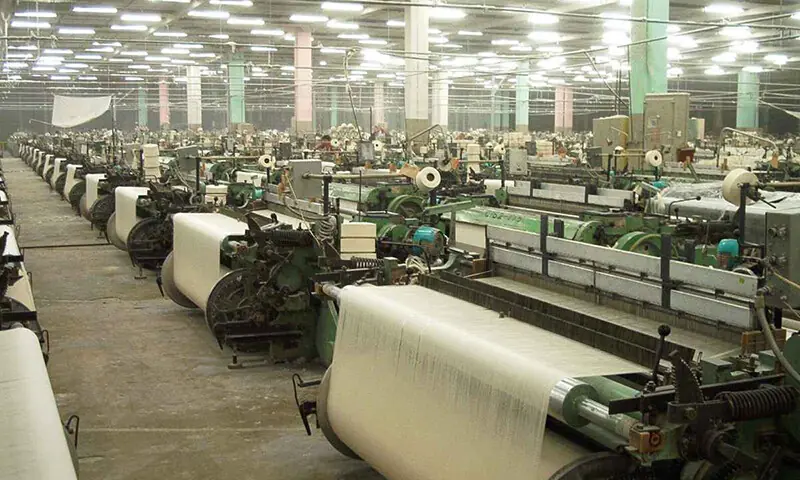
Pakistan’s Textile Sector Shows Early Signs of Recovery
Exports, garments and knitwear post gains, but high energy costs and weak cotton production remain major challenges
KARACHI: Pakistan’s textile industry is showing early signs of stabilisation after several difficult years, although experts caution that recent improvements should not yet be considered a complete recovery.
Textile exports remained broadly stable during fiscal year 2025-26, while several value-added segments recorded stronger growth. However, high energy costs, dependence on imported cotton, limited industrial modernisation and international market pressures continue to affect the sector’s competitiveness.
According to Pakistan Bureau of Statistics data, textile exports edged up 0.26% to $17.93 billion in FY26 from $17.89 billion in the previous fiscal year.
Within the sector, readymade garment exports increased 3.87% to $4.29 billion, while cotton yarn exports rose 12.4% to $765 million.
Stronger Start to FY27
The textile sector recorded more encouraging results during the first two months of FY27.
Textile and clothing exports increased 5.55% year-on-year during July and August, reaching $3.38 billion compared with $3.20 billion during the same period a year earlier.
Readymade garment exports climbed 13.59% to $827 million, while knitwear exports increased 4.79% to $1.004 billion.
Towel exports also rose 6.74% to $191 million, while cotton yarn exports jumped 34.8% to $161 million.
However, cotton cloth exports declined 7.66%, while bedwear exports remained almost unchanged.
The figures indicate that demand is increasingly concentrated in higher-value products such as garments and knitwear rather than being spread evenly across the entire textile supply chain.
Garment Manufacturing Shows Momentum
Manufacturing data also points towards some improvement in selected areas.
Large-scale manufacturing expanded 4.98% during FY26, according to provisional Pakistan Bureau of Statistics figures. The overall textile group, however, declined 0.63%.
Wearing apparel was among the better-performing segments, growing 5.49%, while cotton yarn production recorded a modest increase of around 1%.
The July 2026 figures provide another indication of this shift. Large-scale manufacturing grew 3.03% year-on-year, while textile production declined slightly by 0.03%.
In contrast, wearing apparel production increased by 22.03%, highlighting stronger activity in downstream garment manufacturing.
Cotton Production Remains a Concern
The domestic cotton crop has provided some encouragement, with cotton arrivals at ginning factories reaching 2.389 million bales by September 15, up 19.17% from 2.004 million bales during the same period last year.
Punjab recorded a 24.73% increase in arrivals, while Sindh posted growth of 16.25%.
Industry representatives have indicated that cotton production could exceed six million bales if favourable conditions continue.
However, the crop remains vulnerable to pests, rainfall, changes in cultivated area and quality-related problems. The recent improvement also comes after a significant decline in Pakistan’s cotton production over the years.
Pakistan produced around 14.81 million bales in FY12, but recent output has fallen to roughly 5.5 million bales. As a result, textile manufacturers increasingly rely on imported cotton, exposing them to international prices, freight expenses and exchange-rate fluctuations.
Energy Costs Continue to Pressure Industry
High electricity and gas prices remain among the major challenges facing textile manufacturers.
Industry representatives have repeatedly called for competitive energy prices, tariff reforms and a stable policy environment to help exporters compete in international markets.
Higher energy costs do not only increase production expenses. They can also discourage manufacturers from investing in modern machinery and energy-efficient technologies.
Some companies are nevertheless investing in equipment and technology in an effort to improve productivity and strengthen their position in international markets.
Need for Greater Product Diversification
Pakistan’s textile industry also faces the challenge of remaining heavily dependent on cotton at a time when global fibre consumption has increasingly shifted towards man-made materials.
Expanding into man-made fibre garments, technical textiles and other specialised products could help Pakistani exporters access additional international markets and reduce their dependence on domestic cotton supplies.
The government’s draft Textile and Apparel Policy 2025-30 has set an ambitious target of increasing textile and apparel exports to $29.381 billion by FY30.
The proposed policy focuses on value-added production, higher productivity, investment, sustainability and diversification.
For Pakistan’s textile industry, the current export growth provides some encouragement, but sustained expansion will depend on addressing structural issues such as energy costs, raw material availability, technology, productivity and access to global markets.
The recent figures therefore suggest that parts of the textile industry are gaining momentum, while a broader and lasting recovery will require improvements across the entire production chain.
