


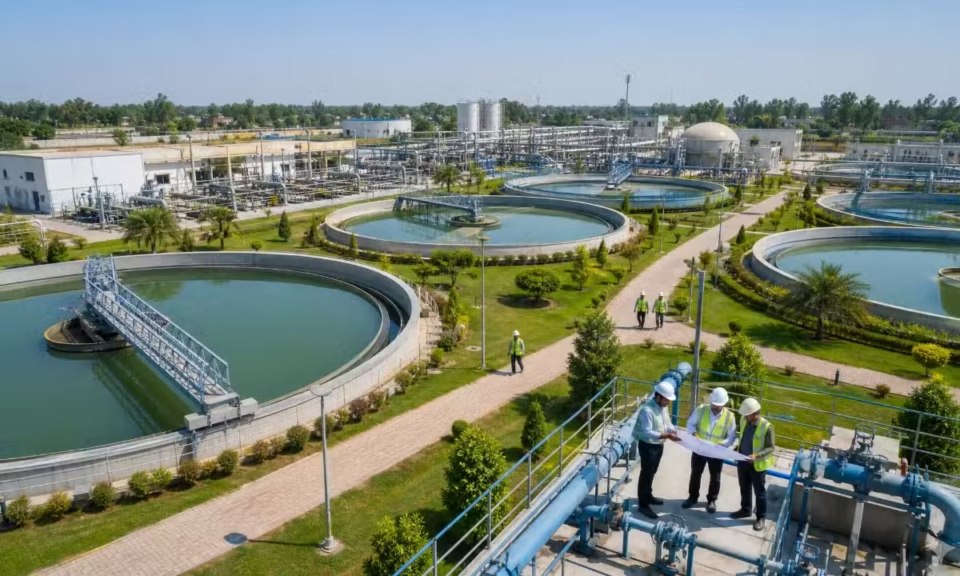
Punjab Announces Plan to Establish Wastewater Treatment Plants Across Cities
The Punjab government has announced plans to establish wastewater treatment plants in cities across the province as part of a broader initiative to improve water supply, sanitation, and urban infrastructure.
The announcement was made by Senior Punjab Minister Marriyum Aurangzeb during the Punjab Assembly’s budget session.
Focus on Modern Water and Sanitation Infrastructure
According to the minister, the initiative aims to modernize aging civic infrastructure while promoting environmental sustainability and improving public health.
As part of the program, the government is replacing underground water supply and sewerage pipelines that have been in service for more than 70 years.
The infrastructure upgrade will cover 84 cities and includes:
- New sewerage networks
- Underground water storage tanks
- Recharge wells to help strengthen groundwater resources
Expansion of Municipal Services
The minister said Water and Sanitation Agencies (WASA) are now operational in 41 districts across Punjab.
In addition, more than 1,500 machines have been provided to local government institutions to improve municipal services, including sanitation and maintenance operations.
Clean Drinking Water Projects Underway
The Punjab government is also implementing clean drinking water projects worth Rs. 42 billion in Dera Ghazi Khan, Multan, Bahawalpur, and surrounding areas.
According to the government, approximately 5,800 water filtration plants are currently providing clean drinking water to communities across the province.
Development Projects Continue
Marriyum Aurangzeb also announced that the Sargodha Cardiology Hospital is expected to be inaugurated during the first week of July following the completion of construction and equipment installation.
She further stated that the government’s Model Villages Program will improve water supply, sanitation, and sewerage services in around 2,400 villages throughout Punjab.
The government says expanding wastewater treatment facilities and upgrading urban infrastructure remain key priorities to support sustainable development and improve public services for residents across the province.
