


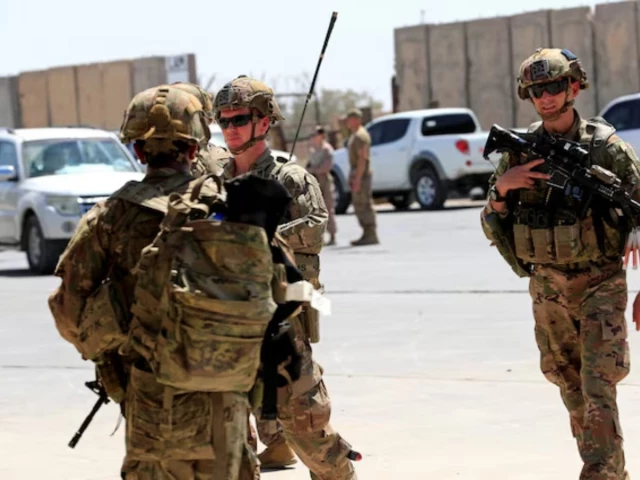
US Set to Complete Iraq Withdrawal After More Than Two Decades
The United States is set to complete the withdrawal of its remaining forces from Iraq by September 30, ending a military presence that began with the 2003 US invasion.
The departure follows a withdrawal agreement reached between Washington and Baghdad in 2024. The process has been carried out in stages, with Iraqi security forces gradually taking greater responsibility for the country’s security.
The US exit is being welcomed by Iran and several Iran-aligned armed groups in Iraq, while some Iraqi security officials and analysts have raised concerns about the possible consequences for the country’s security and political balance.
Iran-Backed Groups Describe Withdrawal as Victory
Abu Mojtaba al-Yasiri, a commander with the Islamic Resistance in Iraq, an umbrella organisation representing Iran-backed armed factions, described the US departure as a major victory for groups that opposed the American military presence.
He said the withdrawal represented a turning point for Iraq and argued that the country’s sovereignty should be maintained through its own institutions and people.
Iran has also welcomed the departure of US forces, describing it as a positive development for its regional allies.
Concerns Over Growing Iranian Influence
Some Iraqi security analysts believe the end of the US military presence could increase Iran’s influence in Iraq.
Security analyst Jasim al-Bahadli told Reuters that the US withdrawal removes a military presence that had served as a counterbalance to Tehran’s influence.
He said Iran-aligned armed groups could attempt to use the situation to increase their role in security and political decision-making.
Iraq has maintained relationships with both Washington and Tehran, making the country an important point of competition between the two powers.
Some Iraqis Raise Security Concerns
While the departure of foreign troops is supported by many Iraqis who want greater national sovereignty, some officials and community leaders have questioned whether the country is fully prepared for the transition.
Abdulrahman al-Zobaie, a tribal leader from Fallujah, said Iraqis broadly support full sovereignty but warned that a sudden reduction in international military support could create security concerns.
The United States invaded Iraq in 2003 and withdrew most of its forces in 2011. American troops returned in 2014 as part of an international campaign to support Iraqi forces against Islamic State militants.
Islamic State Threat Remains a Concern
Another major concern is the possible resurgence of Islamic State, also known as ISIS.
Although the group lost the territory it once controlled in Iraq and Syria, Iraqi and Kurdish security officials say sleeper cells remain active.
Kurdish commander Sirwan Barzani said a reduction in US intelligence, surveillance and logistical assistance could make it easier for Islamic State cells to reorganise.
Iraqi security officials have also reported that an alleged Islamic State cell was preparing attacks around the time of the US withdrawal.
Colonel Khalid al-Bayati, a senior security official in Kirkuk, said the group could try to use the transition to demonstrate that it remains capable of carrying out attacks.
Iraq Enters a New Security Phase
The US withdrawal marks a significant change in Iraq’s security landscape after more than two decades of American military involvement.
With Iraqi forces expected to take greater responsibility for national security, attention will now focus on how Baghdad manages relations with Washington and Tehran while dealing with armed groups and the continuing threat from Islamic State.
The withdrawal also comes as regional tensions remain high, making Iraq’s security and political balance an important issue for neighbouring countries and international powers.
