


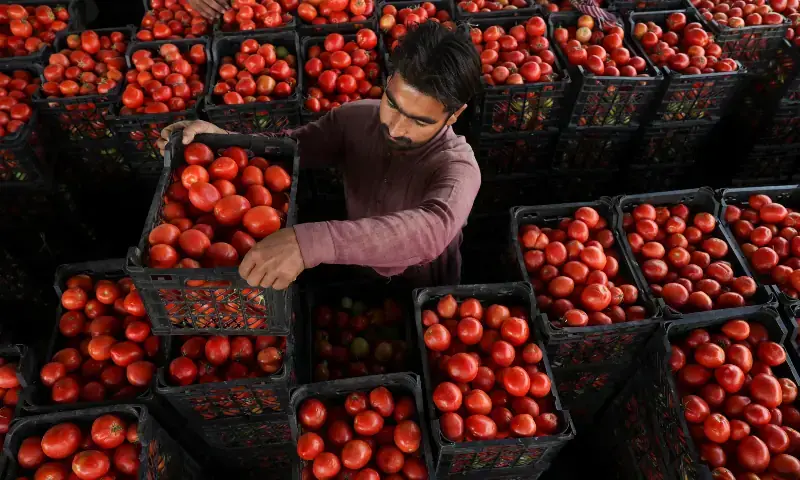
Tomato Prices Remain High Despite Arrival of Iranian Imports
Tomato prices continue to remain elevated in several markets across Pakistan despite the arrival of imported tomatoes from Iran, with many consumers paying between Rs450 and Rs500 per kilogram.
Market traders say that the supply of imported tomatoes has not been sufficient to significantly reduce retail prices.
Limited Supply Keeps Prices Elevated
According to traders, Iranian tomatoes are arriving in relatively small quantities, while locally produced tomatoes from Balochistan are also being sold at similar prices.
In some markets, smaller or less ripe tomatoes are available at slightly lower rates, but prices remain well above normal seasonal levels.
Consumers have responded by reducing their purchases, as higher prices have made tomatoes a more expensive household item.
Traders Cite Quality and Supply Challenges
Market representatives say that Iranian tomatoes have a shorter shelf life compared to locally grown produce and that many buyers prefer Pakistani tomatoes because of their taste and quality.
They also noted that the current supply from Balochistan is not sufficient to meet nationwide demand.
Agriculture experts expect tomato cultivation in Sindh to continue over the coming weeks, with fresh local harvests likely to become available around mid-September, which could help improve market supply.
Prices Have Increased Over Recent Months
According to market observations:
- In April, tomatoes were selling for around Rs80–100 per kilogram.
- By the third week of June, prices had increased to approximately Rs120–160 per kilogram.
- Earlier this month, prices crossed Rs300 per kilogram.
- Current retail prices in some areas have reached Rs450–500 per kilogram.
Actual prices may vary depending on the city, market, and product quality.
Vegetable Exports Decline
Data from the Pakistan Bureau of Statistics (PBS) shows that Pakistan’s vegetable exports declined during FY2025-26 compared with the previous fiscal year.
Industry representatives attributed the decline to several factors, including logistical challenges affecting exports and reduced trade through some regional routes.
Market participants will continue to monitor local crop arrivals in the coming months, as increased domestic production may help improve supply and influence retail prices.
