


NDMA Issues Flood Warning for Several Areas of Pakistan
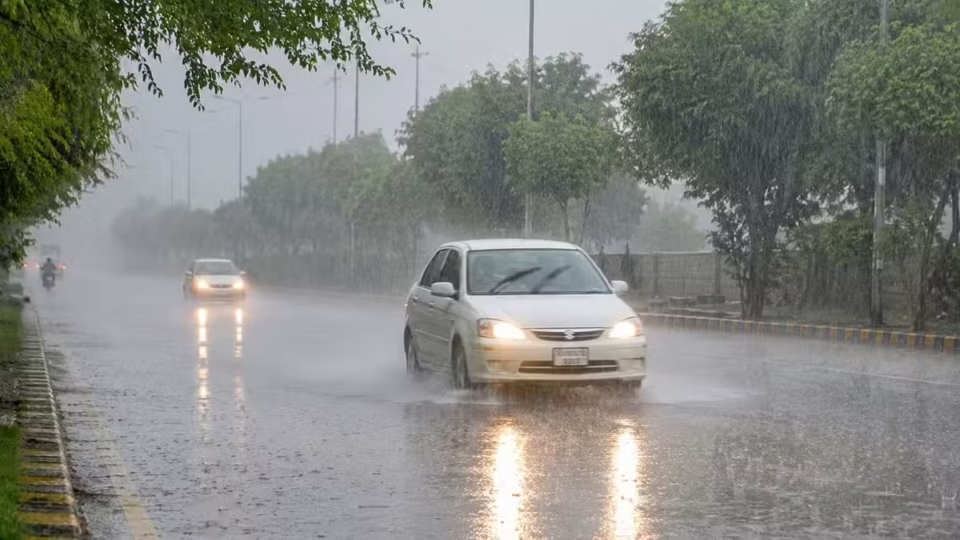
The National Disaster Management Authority (NDMA) has issued a flood alert for several parts of Pakistan as heavy rainfall continues to pose risks to vulnerable and low-lying areas.
The warning was issued through the NDMA’s National Emergencies Operation Centre, which advised relevant authorities to remain prepared for possible flooding and other rain-related emergencies.
Flash Flood Risk in Northern Areas
According to the NDMA, heavy rainfall could trigger flash floods in local streams and nullahs across several areas of Gilgit-Baltistan.
The areas at risk include Diamer, Ghizer, Ashkoman, Gopis, Nagar, Hunza, Shamshal, Skardu and Shiger.
Residents in vulnerable locations have been advised to remain cautious, particularly near streams, nullahs and other areas that can experience sudden increases in water levels.
Khyber Pakhtunkhwa and Balochistan on Alert
The authority has also identified several districts in Khyber Pakhtunkhwa where flash flooding could occur.
These include Upper Dir, Swat, Bajaur, Malakand, Kurram, Kohistan, Mohmand and Orakzai.
In Balochistan, the NDMA has warned of possible flash floods in Zhob, Shirani and Musakhel.
Urban Flooding Risk in Major Cities
Heavy rainfall may also result in urban flooding, particularly in low-lying areas of several cities.
The NDMA has highlighted Islamabad, Rawalpindi, Peshawar, Mardan, Swabi, Gujranwala, Gujrat, Sargodha, Jhang, Toba Tek Singh and Sheikhupura as areas that could face urban flooding.
Relevant departments have been instructed to maintain preparedness and remain vigilant to deal with any potential flooding emergency.
Rain Forecast for Sindh
The NDMA said hot and humid conditions are expected to continue across most parts of Sindh.
However, rain, strong winds and thunderstorms are forecast in Sukkur, Larkana, Jacobabad, Mirpurkhas, Tharparkar, Umerkot, Thatta, Badin, Karachi and surrounding areas until September 16, with intermittent breaks.
Authorities have urged residents to stay updated with official weather and emergency advisories and take necessary precautions in areas vulnerable to flooding.
