


New Wild Cat Species Identified in Bolivia After More Than a Century
Scientists have identified a previously unknown wild cat species in Bolivia, marking the first formal description of a new living feline species in more than 100 years.
Named Leopardus tilcayo, the small wild cat was found in Bolivia’s Yungas cloud forests, a mountainous ecosystem known for its high humidity and rich biodiversity. The discovery was confirmed through genetic research published in the scientific journal Current Biology.
Small Cat Found in Bolivia’s Yungas Forest
The newly identified animal is locally known as the Tilcayo and belongs to the tiger cat group found across South America.
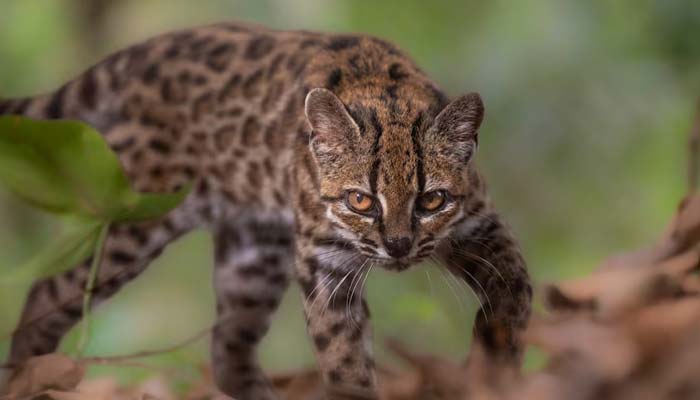
The species is approximately 46 centimeters long and weighs around 1.4 kilograms. That makes it smaller than the average domestic cat.
Researchers say the animal has light-brown fur marked with irregular dark rosettes, giving it a distinctive appearance among closely related wild cats.
Genetic Research Confirmed a Separate Species
Scientists used genetic information from 38 cats collected from different parts of South America, including eight museum specimens.
The analysis revealed that the tiger cat group contains five genetically distinct species rather than a single species as previously understood. Researchers estimated that the Tilcayo lineage separated from other tiger cats about 1.4 million years ago.
The study highlights the importance of genetic research in identifying animals that may look very similar but have been separated evolutionarily for long periods.
Researchers Had Difficulty Identifying the Cat
The Tilcayo attracted scientific attention because its physical characteristics did not completely match descriptions of other tiger cats.
Evolutionary biologist Jonas Lescroart of the University of Antwerp said tiger cats are considered cryptic species, meaning they can be difficult to distinguish based on appearance alone.
Researchers initially had no expectation that the Bolivian animal represented a separate species. Genetic testing eventually provided evidence that it was distinct from the other tiger cats.
Little Is Known About Its Lifestyle
Scientists currently have limited information about the behavior and population of Leopardus tilcayo.
Evidence from scat samples suggests that small rodents may be part of its diet. Camera-trap observations also indicate that the animal may be more active during nighttime hours.
Researchers have so far studied only a small number of live individuals, along with additional camera-trap records, meaning much more research is needed to understand the species’ population, range and behavior.
One male, around 10 years old, is currently living at the Senda Verde Wildlife Sanctuary after previously being kept by a local family.
New Tiger Cat Subspecies Also Identified in Peru
The research also identified a previously unrecognized tiger cat subspecies in Peru’s Yungas region.
Scientists named it Leopardus tigrinus antisuyo, using the name Antisuyu, a historical region associated with the Inca Empire.
The findings indicate that South America’s tiger cats are more genetically diverse than previously recognized.
Conservation Concerns for the New Species
The discovery also raises questions about the conservation status of the Tilcayo.
The Yungas forests face pressure from deforestation, agricultural expansion, fires and mining. Researchers have shared their findings with the International Union for Conservation of Nature (IUCN), which is expected to assess the newly recognized lineages separately.
A separate assessment could provide a clearer understanding of the risks facing Leopardus tilcayo, particularly because scientists currently have limited information about its population and distribution.
A Rare Discovery in Modern Wildlife Research
The identification of Leopardus tilcayo demonstrates that previously unknown species can still be found even among relatively well-studied groups of mammals.
Researchers say the discovery also highlights the importance of protecting ecosystems such as Bolivia’s Yungas forests, where biodiversity remains incompletely documented and habitats face increasing environmental pressure.
