


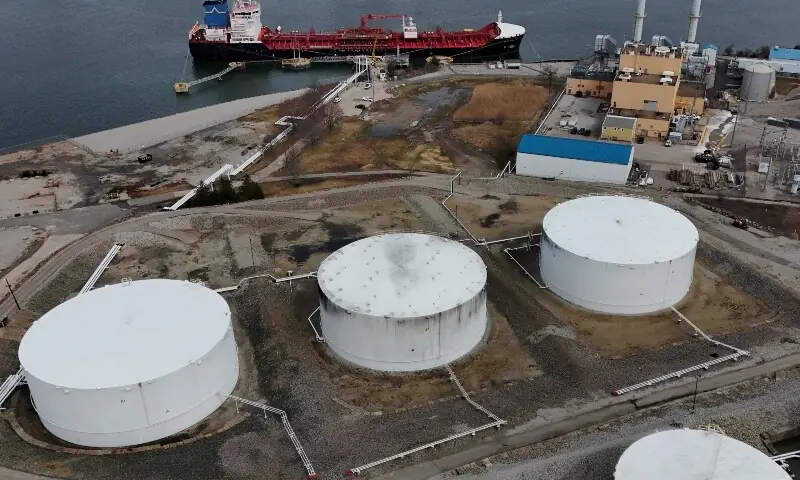
Oil Prices Fall More Than 6% as US-Iran Tensions Ease
Global oil prices declined by more than 6% on Monday after reports indicated a pause in military activity between the United States and Iran over the weekend, raising hopes that diplomatic efforts could help reduce regional tensions.
Market participants viewed the temporary pause as a positive development, easing concerns about potential disruptions to global energy supplies and key shipping routes.
Brent and WTI Crude Decline
During early trading, Brent crude futures fell by $6.20 (6.4%) to $90.58 per barrel, while U.S. West Texas Intermediate (WTI) crude dropped $5.80 (6.5%) to $83.51 per barrel.
Both benchmark oil contracts reached their lowest levels in nearly a week after posting gains over the previous three weeks.
Market Responds to Reduced Tensions
Oil prices had previously climbed amid concerns that the conflict could disrupt shipments through the Strait of Hormuz, one of the world’s most important oil transportation routes.
Recent reports suggesting a pause in military activity have improved market sentiment, with investors closely monitoring diplomatic developments.
Analysts noted that the decline in prices reflects expectations that a reduction in regional tensions could support the continued movement of global energy supplies.
Shipping Activity Remains Under Watch
Despite the improvement in market sentiment, shipping activity through the Strait of Hormuz remained below normal levels over the weekend, according to shipping data cited in reports.
Industry analysts believe shipping traffic may recover gradually as operators continue to assess security conditions before returning to regular operations.
Some experts also noted that shipping activity in the Bab el-Mandeb Strait remains under close observation following recent security-related incidents in the region.
Supply Risks Continue to Influence Markets
While oil prices declined on hopes of de-escalation, analysts said the energy market continues to monitor developments in the Middle East as well as the ongoing conflict between Russia and Ukraine.
Market observers believe that any prolonged disruption to global crude oil supplies or shipping routes could continue to influence energy prices and broader economic conditions.
Investors are expected to remain focused on diplomatic developments, supply trends, and shipping activity in the coming days as global energy markets assess the evolving situation.
