


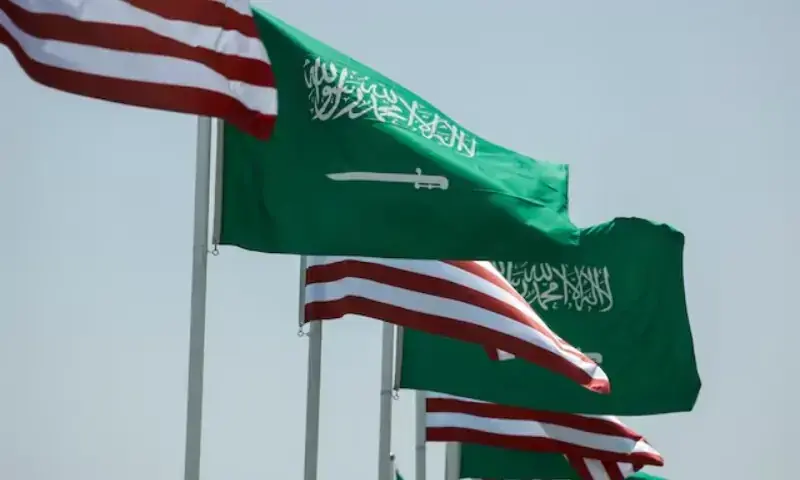
US and Saudi Arabia Conduct Joint Airstrikes in Iraq Following Regional Security Incidents
The United States and Saudi Arabia announced that their forces carried out joint airstrikes in eastern Iraq on Wednesday, saying the operation targeted armed groups they accused of carrying out recent attacks against US personnel and Saudi energy facilities.
According to statements from the two countries, the strikes were launched in response to a series of drone attacks reported over the past several days.
Joint Military Operation
The US military said American and Saudi aircraft conducted precision strikes on multiple locations that it described as logistics and weapons sites used by Iran-backed armed groups operating in eastern Iraq.
Officials stated that the operation was intended to reduce the groups’ operational capabilities and deter further attacks on military personnel and critical infrastructure.
Saudi Arabia’s Ministry of Defense also confirmed its participation in the operation, saying the targeted groups were linked to attacks on the kingdom’s energy facilities.
Regional Tensions Continue
The military action came shortly after a brief pause in hostilities involving Iran and the United States. US officials also reported intercepting missiles fired toward American military bases in the Gulf earlier this week, contributing to renewed tensions in the region.
Meanwhile, Iran’s Islamic Revolutionary Guard Corps (IRGC) said it had taken action against several oil tankers in the Strait of Hormuz and maintained that it continues to monitor security in the strategic waterway.
Trump and Netanyahu Hold White House Meeting
The developments coincided with a meeting in Washington between US President Donald Trump and Israeli Prime Minister Benjamin Netanyahu.
According to the White House, the leaders held discussions on regional security and other Middle East developments. After the meeting, President Trump described the talks as “very good,” while Prime Minister Netanyahu said the discussions focused on shared security objectives, including concerns about Iran’s nuclear program.
Oil Prices Rise
Global oil prices moved higher following the latest developments, with crude prices rising by more than four percent as markets reacted to concerns over potential disruptions in the Middle East.
The Strait of Hormuz remains one of the world’s most important shipping routes for oil and gas exports, and any instability in the area is closely monitored by global energy markets.
Ongoing Diplomatic Efforts
Despite the renewed military activity, diplomatic efforts aimed at reducing tensions in the region continue. International attention remains focused on maintaining stability in the Gulf, ensuring the security of commercial shipping routes, and encouraging dialogue among regional stakeholders.
Officials from several countries continue to call for restraint and diplomatic engagement to prevent further escalation.
