


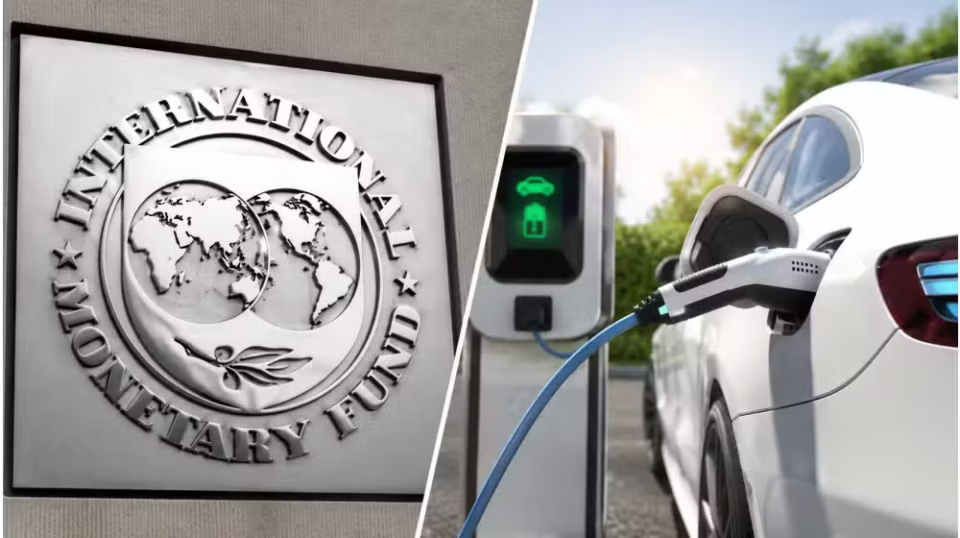
Pakistan Opposes IMF Proposal to Impose 18% GST on Electric Vehicles
Pakistan’s Ministry of Industries and Production has opposed the International Monetary Fund proposal to impose an 18 percent General Sales Tax (GST) on electric vehicles (EVs), instead recommending a concessional tax rate of just 1 percent under the country’s upcoming auto policy.
During discussions with a visiting IMF delegation, government officials shared key details of the proposed policy framework and suggested a reduced 1 percent GST on New Energy Vehicles. The proposal covers electric cars, buses, trucks, pickups, tractors, motorcycles, three-wheelers, and other commercial vehicles.
Officials argued that hybrid vehicles already benefit from a lower GST rate of 8.5 percent and said fully electric vehicles should receive stronger incentives to encourage adoption and support environmentally friendly transportation.
The ministry also highlighted concerns regarding tax imbalances in the EV supply chain. According to officials, imported EV parts currently face only 1 percent GST, while locally manufactured components are taxed at 18 percent.
To support local manufacturing and reduce refund-related complications, the government proposed applying the same 1 percent GST rate across the entire electric vehicle value chain.
Talks with the IMF also covered Pakistan’s broader tariff reform commitments under the National Tariff Policy. The government has assured the IMF that the country’s weighted average tariff will gradually decline from 10.6 percent in FY25 to 7.4 percent by FY30.
For the automobile sector, planned reforms aim to reduce the weighted average tariff to below 6 percent by 2030 under the current roadmap.
However, officials from the Ministry of Industries expressed concerns over the pace of tariff reductions, arguing that countries such as India and Bangladesh continue to maintain higher import duties on vehicles to protect domestic industries.
According to officials, Pakistan’s new auto policy is in the final stages and will be shared with the IMF before being presented to the federal cabinet for approval.
Separately, the proposed Motor Vehicle Development Act has been submitted to Parliament. The legislation would grant the Engineering Development Board statutory powers to enforce environmental and safety standards for locally manufactured and imported vehicles.
Government officials expect the legislation to receive approval from the National Assembly of Pakistan before the end of June 2026, although some coalition partners have reportedly raised concerns over certain provisions of the proposed law.
