


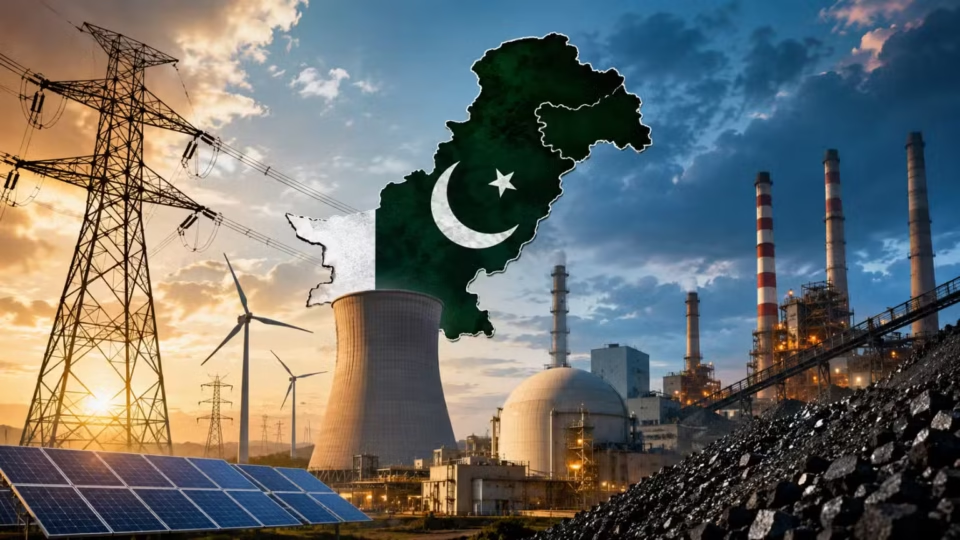
Nuclear Becomes Pakistan’s Leading Source of Electricity as RLNG Output Declines
Pakistan’s electricity generation recorded a year-on-year decline of 9.7% in April 2026, falling to 9,498 GWh, according to data compiled by Topline Securities. However, production showed a 6.3% recovery compared to the previous month.
The overall drop in power generation was mainly driven by a sharp fall in RLNG-based electricity, while nuclear and coal-based power sources increased their share in the national energy mix.
Shift in Energy Mix
During April, nuclear power emerged as the largest source of electricity generation, producing 2,097 GWh and accounting for 22.1% of total output, compared to 17.9% in the same month last year.
Hydropower followed closely with 2,079 GWh, although it showed a 10% decline year on year.
Coal-based generation also increased its contribution. Local coal produced 1,482 GWh, while imported coal rose 27% to 1,343 GWh. Together, coal and nuclear sources made up more than half of the country’s electricity generation during the month.
Gas-based generation increased 15% year on year to 968 GWh, representing 10.2% of the fuel mix.
In contrast, RLNG-based generation saw a significant decline of 82%, falling to 380 GWh and reducing its share to 4% from over 20% a year earlier.
Renewable Energy Trends
Among renewable sources, wind power dropped 14% to 409 GWh, while solar generation fell sharply by 44% to 64 GWh.
Bagasse-based generation showed strong growth, rising 200% to 111 GWh, though it still contributed a small share overall.
Furnace oil generation surged significantly, increasing 483% year on year to 486 GWh.
Fuel Cost Trends
The average cost of electricity generation declined 5% year on year to Rs. 9.4 per unit in April 2026, compared to Rs. 9.9 per unit last year. However, costs rose 17% compared to the previous month.
Over the first 10 months of FY26, the average generation cost stood at Rs. 8.3 per unit, down from Rs. 8.8 per unit in the same period last year.
Among different energy sources, hydel, wind, and solar remained the cheapest, with near-zero fuel costs.
Nuclear power remained relatively low-cost at Rs. 2.8 per unit, making it one of the most economical large-scale electricity sources.
In contrast, imported coal cost Rs. 17.6 per unit, while gas and RLNG stood at Rs. 13.8 and Rs. 13.7 per unit respectively. Furnace oil remained the most expensive source at Rs. 45.3 per unit.
Overall, the data highlights a clear shift in Pakistan’s energy mix, with nuclear and coal playing an increasingly important role amid declining RLNG-based generation.
