


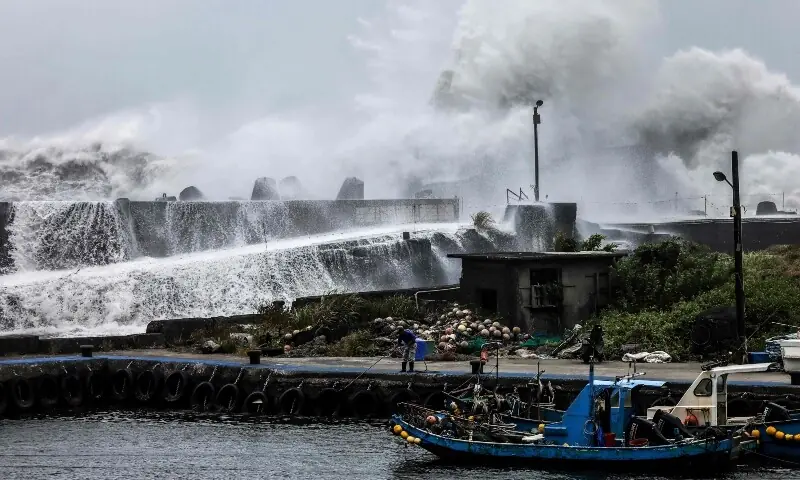
China Evacuates Over 600,000 Residents Ahead of Typhoon Bavi
Chinese authorities evacuated more than 600,000 residents on Saturday as Typhoon Bavi approached the eastern coastal city of Wenzhou after bringing heavy rain and strong winds to Japan’s southern islands and passing close to northern Taiwan.
According to weather forecasts, Typhoon Bavi is expected to make landfall near Wenzhou, a city with a population of around 10 million, during the early hours of Sunday.
Officials in Zhejiang Province, where Wenzhou is located, relocated more than 500,000 people from vulnerable areas, while over 100,000 residents were also evacuated from neighboring Fujian Province as a precaution.
Although the storm has gradually weakened while moving over cooler waters, meteorologists warn that Bavi still carries significant amounts of moisture, increasing the risk of heavy rainfall, flooding, and strong winds across affected regions.
Residents in Wenzhou spent the day making final preparations before the storm arrived. Many stocked essential supplies, while local authorities implemented safety measures and advised people to remain indoors where possible.
Taiwan Avoids Direct Landfall
Taiwan escaped a direct hit from Typhoon Bavi, but authorities still carried out large-scale precautionary measures due to forecasts of intense rainfall in several areas.
More than 14,000 residents, primarily from mountainous regions, were evacuated as the storm passed north of the island. Nearly 920 international flights and all 280 domestic flights were canceled, significantly disrupting air travel.
Most cities and counties declared a typhoon holiday, leading to the closure of schools, government offices, and many businesses. However, Taiwan’s north-south high-speed rail continued operating with reduced services.
While conditions in central Taipei remained relatively manageable, stronger wind gusts and heavy rain affected several northern districts, where fallen trees and rising water levels were reported.
Regional Impact
Japan’s southern Sakishima island chain also experienced heavy rain and powerful winds as the typhoon moved through the region.
In the Philippines, authorities reported fatalities linked to heavy monsoon rains that were intensified by Typhoon Bavi, highlighting the storm’s broader impact across East Asia.
Emergency teams across the affected countries remain on alert as weather agencies continue monitoring the storm’s movement and advise residents in high-risk areas to follow official safety instructions.
