


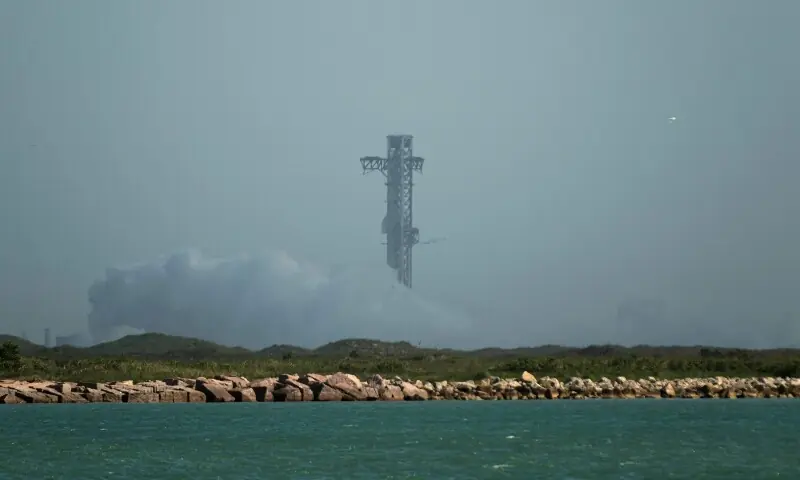
SpaceX Postpones Starship Test Flight After Automatic Launch Abort
SpaceX postponed the launch of its 13th Starship test flight after the mission was automatically aborted during the final moments of the countdown.
According to SpaceX CEO Elon Musk, the launch was halted because some of the rocket’s engines did not start as expected, triggering the vehicle’s built-in safety system.
“Some of the engines didn’t start, triggering an automatic launch abort,” Musk said in a post on X.
Next Launch Attempt Expected Soon
Musk later said that two Raptor engines will be removed and replaced before the next launch attempt.
He added that, if preparations go as planned, the next opportunity for the test flight is expected early next week.
Mission Objectives
The upcoming mission will be the 13th test flight of the Starship program and the first since SpaceX became a publicly traded company.
The flight is expected to build on the progress made during the previous Starship test in May 2026, which successfully demonstrated several features of the third-generation Starship vehicle but also experienced engine-related issues with the Super Heavy booster.
SpaceX says it has introduced several hardware and software improvements to address the issues identified during the earlier mission.
Planned Flight Tests
During the mission, SpaceX aims to:
- Demonstrate a successful launch and ascent.
- Complete stage separation between Starship and the Super Heavy booster.
- Perform a controlled offshore landing of the booster.
- Deploy 20 Starlink V3 satellites.
- Test an in-space restart of a Raptor engine.
- Evaluate upgrades to Starship’s heat shield during re-entry.
Importance of the Starship Program
Starship is central to SpaceX’s future space exploration plans and commercial launch services.
The company is also working with NASA on a modified version of Starship that is intended to support future lunar missions under the agency’s Artemis program.
The postponed launch allows engineers to complete additional inspections and engine replacements before the next flight attempt, with the goal of ensuring a safe and successful mission.
