


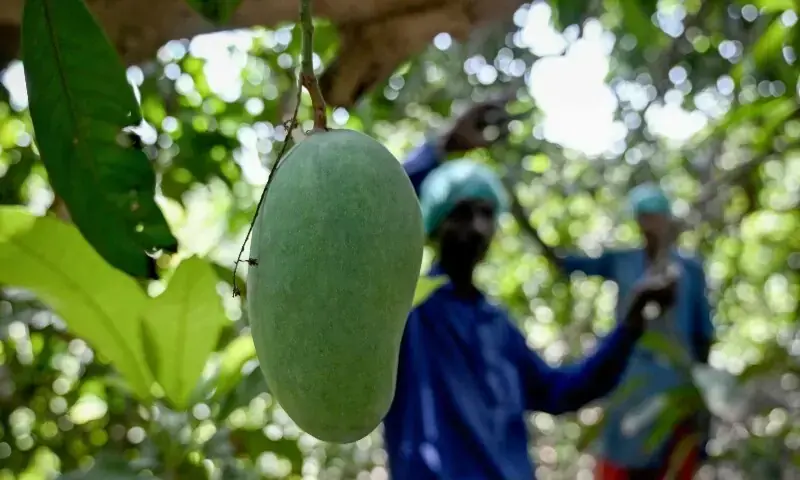
Pakistan’s Mango Industry Faces Challenges from Climate Change and Export Slowdown
Pakistan’s mango industry is facing a difficult season as lower exports, changing weather patterns, and rising production costs continue to affect growers across the country. Farmers say a combination of market and environmental pressures has reduced profitability and created uncertainty for one of Pakistan’s most important fruit crops.
Export Challenges Affect Mango Trade
One of the major issues this season has been a decline in exports to several traditional markets.
Afghanistan has historically been an important destination for Pakistani mangoes because of its proximity and relatively simple trade procedures. However, disruptions in cross-border trade have significantly reduced shipments this year, affecting overall export volumes.
Trade has also faced challenges in other regional markets. Shipping disruptions, higher freight costs, and logistical difficulties have made exports to parts of the Gulf more expensive and less predictable.
Although exports to some countries have increased, industry experts say the gains have not been enough to offset declines in other key markets.
Extreme Weather Impacts Production
Farmers have also been dealing with difficult weather conditions during the growing season.
Higher temperatures, irregular rainfall, heatwaves, and strong winds have affected flowering, fruit development, and overall crop quality. These conditions have also increased the spread of pests and plant diseases, requiring growers to spend more on crop protection.
As a result, many orchards have produced a larger share of lower-grade fruit compared with premium-quality mangoes that are preferred in export markets.
Agricultural specialists estimate that weather-related factors may have reduced production in some growing regions this season.
Rising Costs Put Pressure on Farmers
At the same time, growers are facing increasing expenses for fertilizers, pesticides, labor, harvesting, packaging, and transportation.
Many farmers say market prices have not risen enough to cover these higher production costs, making it more difficult to earn sustainable returns from mango cultivation.
The combination of lower export demand and reduced fruit quality has further affected farm incomes in several mango-producing areas.
Domestic Demand Also Under Pressure
Economic conditions have also influenced local fruit consumption.
With many households prioritizing essential expenses, demand for higher-priced seasonal fruits has become more limited. Industry observers say this has reduced opportunities for growers to offset weaker export sales through the domestic market.
Long-Term Concerns for the Fruit Sector
Agriculture experts note that the total area under fruit cultivation in Pakistan has declined over recent years as some farmers shift toward crops that provide quicker financial returns.
Since mango orchards require several years before reaching full commercial production, growers are increasingly weighing the risks of long-term investment against changing market conditions.
Experts believe that strengthening Pakistan’s fruit industry will require continued investment in climate-resilient crop varieties, improved orchard management, modern farming practices, value-added processing, and expanded access to international markets.
Such measures could help improve the competitiveness of Pakistan’s mango sector while supporting growers as they adapt to evolving environmental and economic challenges.
