


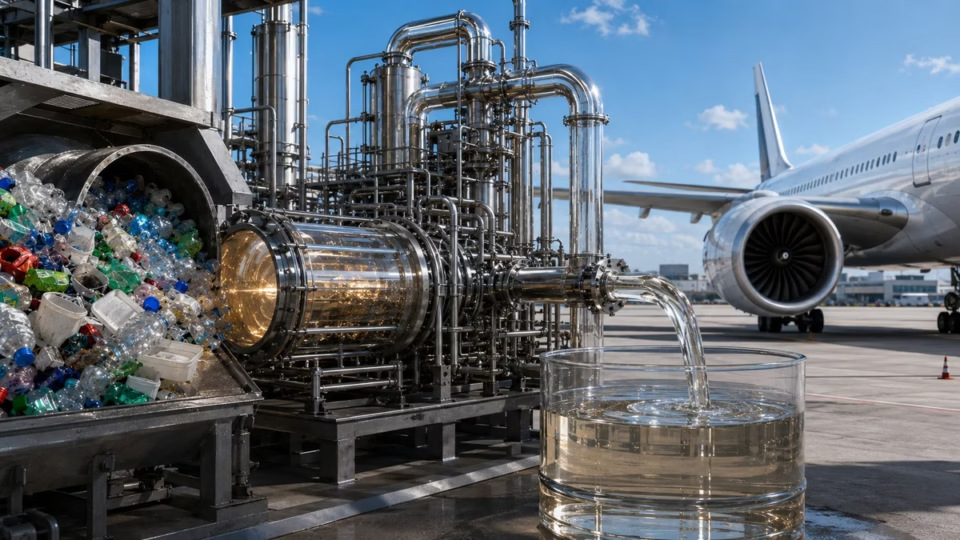
New Research Shows Promise for Converting Plastic Waste Into Aviation Fuel
Researchers in China have developed a new chemical process that could help convert plastic waste into aviation fuel components more efficiently and at a lower cost.
The study was carried out by scientists from the Shanghai Advanced Research Institute of the Chinese Academy of Sciences and Fudan University. Their research focuses on breaking down common plastic materials into valuable hydrocarbons that can be used in fuel production.
Why This Research Matters
Global plastic production exceeds 460 million tonnes annually, with a large portion ending up in landfills or the environment.
Among the most common types of plastic waste are polyethylene and polypropylene, which together account for more than 60% of global plastic waste.
These plastics contain long hydrocarbon chains that, when processed correctly, can be converted into C8–C16 hydrocarbons—key ingredients used in aviation fuel.
New Catalyst Improves Efficiency
One of the biggest challenges in recycling plastics into fuel is breaking their strong chemical bonds efficiently.
To address this, researchers developed a catalyst that combines nickel and cobalt.
According to the study, the new catalyst helps:
- Break down plastic molecules more effectively
- Produce a higher proportion of liquid fuel components
- Reduce the formation of unwanted byproducts
The researchers reported a liquid fuel yield of 82.3%, with approximately 79% of the output consisting of hydrocarbons suitable for aviation fuel production.
Potential Cost and Environmental Benefits
Unlike some existing methods that rely on expensive precious metals, the new process uses nickel and cobalt, which are more widely available and less costly.
The researchers also estimate that, when powered by renewable energy, the process could significantly reduce greenhouse gas emissions compared with conventional fuel production methods.
More Development Still Needed
Despite the encouraging laboratory results, the technology is still in the research stage.
Scientists say further work is required before it can be used commercially, including:
- Scaling the process for industrial production
- Testing it with mixed plastic waste
- Improving catalyst durability when exposed to contaminants commonly found in recycled plastics
A Promising Step Toward Better Plastic Recycling
The research highlights a potential new approach to recycling plastic waste into higher-value fuel products.
While the technology is not yet ready for commercial deployment, it represents a promising development that could help reduce plastic pollution and support more sustainable fuel production in the future.
