


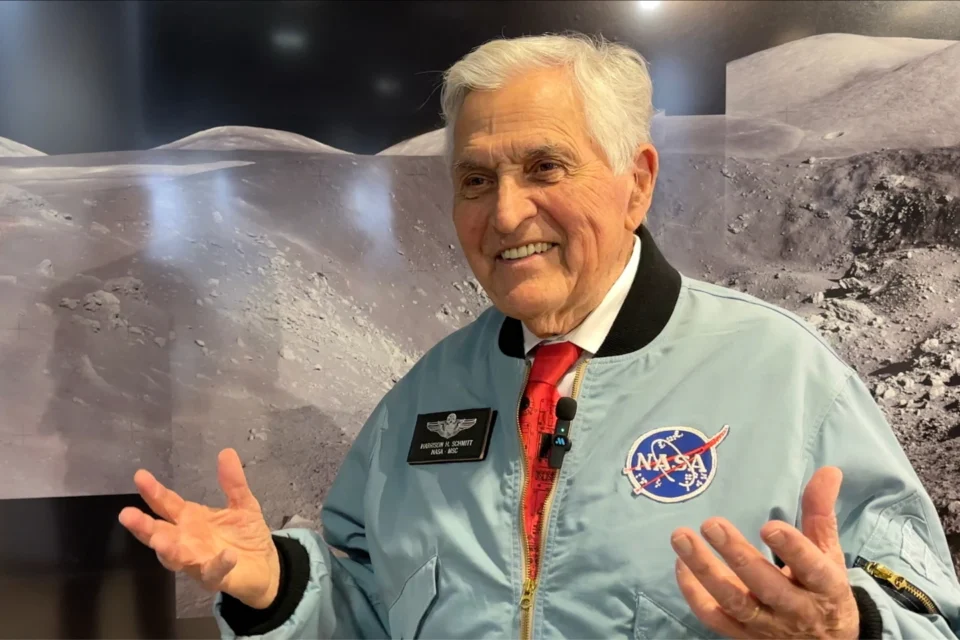
Apollo Astronaut Shares Insights on Moon Missions and Future Space Exploration
A veteran astronaut from the Apollo 17 has shared valuable insights on humanity’s return to the moon, the potential for space exploration, and the future of energy resources beyond Earth.

Looking Ahead to Future Moon Missions
Harrison Schmitt, one of the last astronauts to walk on the moon, expressed optimism about upcoming missions under the Artemis program. He believes establishing a lunar base could play a key role in preparing for future missions to Mars and beyond.
According to Schmitt, the moon offers both scientific and strategic advantages, including opportunities to test technologies and gain experience for long-duration space travel.
Importance of Moon Research
During his mission, Schmitt studied geological formations and collected samples that helped scientists better understand the origin of the moon and the solar system. He highlighted that the moon acts as a “record keeper” of cosmic history, preserving evidence from billions of years ago.
Moon rocks, especially those rich in titanium, may also hold valuable resources. One such resource is helium-3, an isotope that could potentially be used for cleaner energy production in the future.
Energy and Space Exploration
Schmitt pointed out that helium-3 could play a major role in future energy solutions. Unlike traditional nuclear energy, it may offer a cleaner alternative with fewer environmental risks. This possibility is one reason why global interest in lunar exploration continues to grow.
Living and Working on the Moon
The astronaut described the moon as a relatively manageable environment for work, thanks to its lower gravity. However, he noted that challenges such as radiation exposure and long-term sustainability still need to be addressed before permanent settlements can become a reality.
Are We Alone in the Universe?
When asked about life beyond Earth, Schmitt said that while the possibility exists due to the vast number of stars and planets, there is currently no clear evidence of extraterrestrial visits. He described the idea as “plausible, but unlikely.”
A Message for Future Generations
Schmitt emphasized the importance of education, particularly in science and mathematics, for young people interested in space exploration. He believes the next generation will play a crucial role in advancing human presence beyond Earth.
With renewed global interest in lunar missions and rapid technological advancements, experts say humanity may be closer than ever to returning to the moon—and eventually reaching Mars.
