


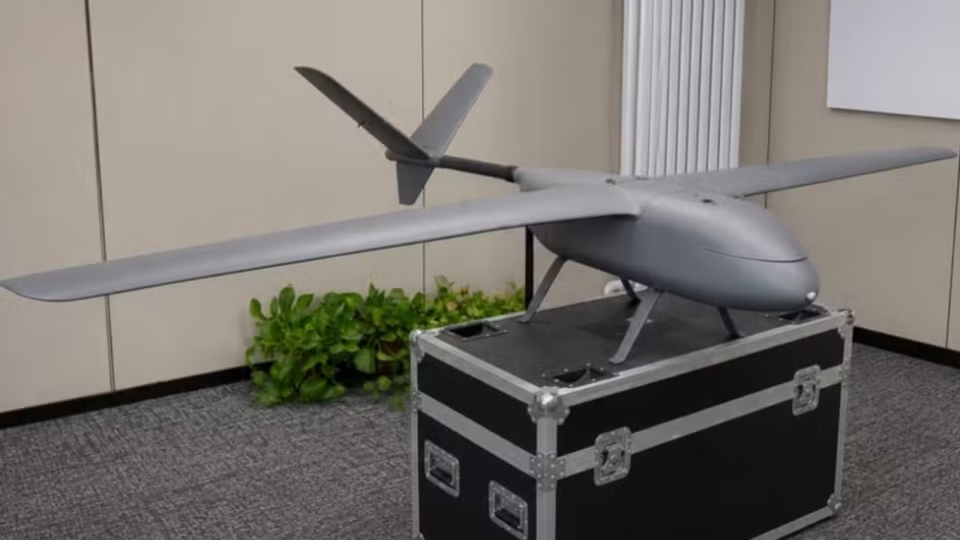
Chinese Company Introduces Radar-Absorbing Coating for Drones and Aircraft
A technology company based in Shenzhen, China, has introduced a radar-absorbing coating designed to reduce the radar visibility of drones, aircraft, and maritime platforms.
The product, marketed under the XRAM C series, is intended for organizations seeking advanced materials that can help lower the radar signature of various aerial and naval systems. The coating is available in multiple package sizes and can be applied using specialized spray equipment.
Growing Interest in Drone Technology
As drones continue to play a larger role in surveillance, inspection, and security operations, manufacturers are increasingly exploring technologies that improve performance and operational effectiveness.
Radar systems remain one of the primary tools used to detect and track unmanned aerial vehicles. Materials designed to reduce radar reflections have therefore attracted growing interest from researchers and industry participants worldwide.
XRAM C Series Variants
According to the company, the XRAM C product line includes several variants optimized for different radar frequency ranges.
- XRAM C105 is designed for X and Ku band frequencies.
- XRAM C112 is optimized for S and C band frequencies.
- XRAM C113B offers coverage across multiple frequency ranges for broader radar signature reduction.
The manufacturer states that the coating can maintain its performance under high-temperature conditions and is available in 1 kg, 5 kg, and 10 kg containers.
Expanding Market for Advanced Materials
Radar-absorbing materials have traditionally been associated with specialized aerospace and defense applications. However, advances in manufacturing and material science are making such technologies more accessible to a wider range of industries.
Analysts note that as drone adoption grows, interest in technologies that improve operational capabilities, durability, and detection resistance is also expected to increase.
Global Research and Development Efforts
Companies and research organizations around the world are actively developing next-generation radar-absorbing materials. Several international firms are exploring solutions for use in aviation, maritime systems, and unmanned platforms.
The growing focus on advanced materials reflects broader trends in aerospace innovation, where manufacturers continue to seek ways to improve efficiency, performance, and system integration.
Future of Drone Innovation
Industry experts believe that future advancements in drone technology will involve not only improved sensors, longer flight times, and enhanced communication systems but also new materials that support specialized operational requirements.
As research in this field continues, radar-absorbing coatings and related technologies are expected to remain an area of interest for both commercial and industrial applications.
