


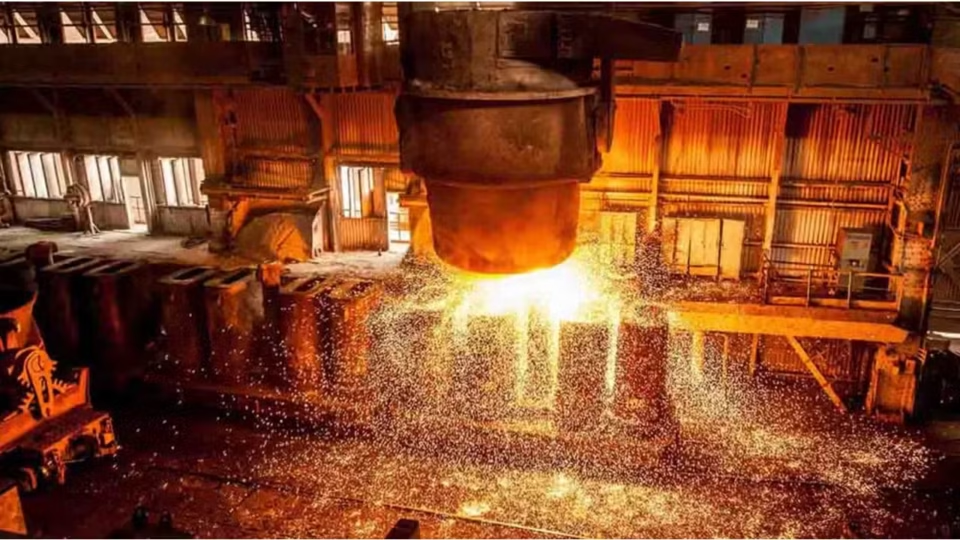
Pakistan Steel Mills Records Rs. 79.3 Billion Losses in Three Years
Pakistan Steel Mills (PSM) has recorded losses of Rs. 79.3 billion over the last three fiscal years despite remaining closed since 2015.
Data from the Ministry of Industries shows that the state-owned steel mill suffered a loss of Rs. 24 billion during the fiscal year 2025-26.
The mill has remained non-operational since June 2015, when its production activities were shut down.
Interest Payments Make Up Most of the Losses
Interest expenses were a major reason behind the losses during the three-year period.
From FY2023-24 to FY2025-26, PSM paid around Rs. 57.4 billion in interest, making up nearly 72 percent of its total losses.
In FY2025-26 alone, interest payments reached Rs. 17.7 billion. This included around Rs. 11.8 billion on government loans and Rs. 5.2 billion on commercial bank loans.
PSM Carries Heavy Debt
The Central Monitoring Unit (CMU) had earlier recommended restructuring the mill’s debt to reduce its financial burden.
As of FY2024-25, PSM’s cash development loan stood at around Rs. 108 billion, carrying an annual interest cost of approximately Rs. 11.5 billion.
The mill also had more than Rs. 40 billion in bank loans, with a significant portion linked to the government-owned National Bank of Pakistan.
The CMU suggested measures including debt-to-equity swaps and negotiated reductions in liabilities.
It also proposed transferring the liabilities to a separate holding company as part of a broader government debt management plan.
Expenses Continue Despite Closure
Although Pakistan Steel Mills has not been operational for years, it continues to incur various expenses.
During the last three fiscal years, around Rs. 3.9 billion was spent on employee salaries.
A further Rs. 9.1 billion was spent on utilities and related requirements, including fuel, electricity, water and gas.
Calls for Modernisation and Investment
The CMU has also highlighted technological obsolescence, high liabilities and limited production capacity as major challenges facing PSM.
According to the monitoring unit, these issues have affected the mill’s ability to compete with imported steel.
The CMU recommended exploring joint ventures with international steel manufacturers. Such partnerships could potentially provide technical expertise, foreign investment and access to international export markets.
The monitoring unit has warned that without reforms in debt management, subsidies and operations, Pakistan Steel Mills and other state-owned trading enterprises could continue to place financial pressure on the government.
