


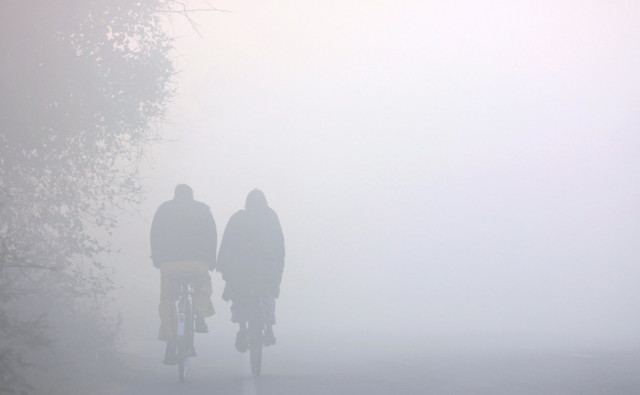
Lahore Air Quality Worsens Ahead of Smog Season
LAHORE: Air pollution levels in Lahore and several other major cities of Punjab have reached unhealthy levels ahead of the province’s traditional smog season, raising concerns about worsening air quality during the coming months.
Real-time monitoring by the Punjab Environmental Protection Agency (EPA) recorded Lahore’s Air Quality Index (AQI) at 187 around 8am on Tuesday, placing the city in the category considered unhealthy for sensitive groups. By 11am, the overall AQI had fallen to 167, remaining within the same category.
Among monitored Punjab cities, Lahore ranked fourth at the time, while Chiniot recorded an AQI of 183, Narowal 174 and Gujrat 170.
Air quality was considerably poorer at several locations within Lahore. DHA Phase 6 recorded an AQI of 224, while Multan Road reached 221. Other readings included Safari Park at 199, Kahna Nau at 197, GT Road at 196, Wagha Border at 195 and Shahdara at 192.
The city’s seven-day AQI peak had reached 246 earlier in the week.
A separate air-quality ranking placed Lahore at an AQI of 207 and listed it among the world’s most polluted cities at that time. However, differences between monitoring networks, locations and measurement times can produce different AQI readings and rankings.
Multiple Sources of Pollution
The rise in pollution has been recorded before the peak period of Punjab’s smog season, which the EPA generally considers to run from October through February.
Major sources of air pollution include vehicle emissions, industrial activity, brick kilns, construction dust, road dust, waste burning and agricultural activities, including crop-residue burning.
Authorities also face challenges in monitoring smaller industrial units and workshops operating across residential, commercial and industrial areas. These include metal workshops, foundries, furnaces, chemical businesses and other facilities that use combustion processes.
Unlike larger factories, many smaller units are spread across different parts of the city, making regular monitoring and enforcement more difficult.
EPA Steps Up Enforcement
The environmental authorities have increased monitoring efforts through thermal drones, day-and-night enforcement teams and technology-based systems designed to identify pollution sources.
Officials inspected 37 brick kilns and 11 industrial units within a 24-hour period, with several facilities sealed over reported violations. Legal action against one unit resulted in an FIR and a Rs500,000 fine.
Authorities also inspected 34 barbecue outlets and other commercial cooking sites, with nine reportedly sealed for failing to meet environmental requirements.
Environmental expert Dr Munawar Sabir said the pre-smog period normally begins in Lahore and other major Punjab cities toward the end of September. He also pointed to the difficulty of monitoring smaller factories that may operate intermittently, particularly during evening and nighttime hours.
The latest readings have highlighted the need for continued monitoring and enforcement as Punjab approaches the main smog season.
