


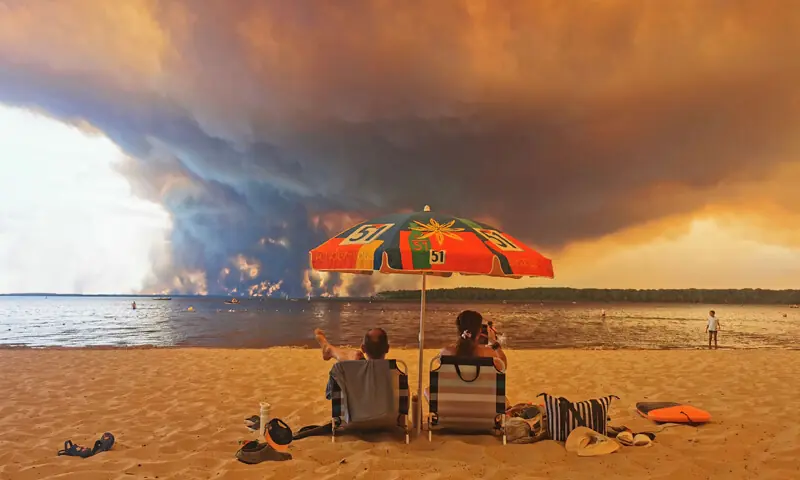
Experts Explain the Science Behind France’s Growing ‘Fire Clouds’
As firefighters continue to battle large wildfires in parts of France, experts are drawing attention to a weather phenomenon known as “fire clouds”, which can make wildfire conditions more difficult to manage.
Scientifically called pyrocumulonimbus clouds, these cloud formations can develop above intense wildfires and may influence local weather by generating strong winds, lightning, and rapidly changing fire behavior.
What Are Fire Clouds?
According to wildfire researcher Jean-Baptiste Filippi, fire clouds form when the intense heat from a large wildfire causes hot air and moisture to rise into the atmosphere.
The rising air can create towering cloud formations that resemble thunderstorms. Under certain conditions, these clouds may produce:
- Strong and unpredictable wind patterns
- Powerful upward and downward air currents
- Lightning that can ignite additional fires
- Rapid changes in wildfire behavior
Experts say these conditions can make firefighting operations more challenging.
Where Have They Been Observed?
Fire clouds have previously been observed in regions that frequently experience large wildfires, including:
- Portugal
- California
- Australia
Researchers say the phenomenon has become more noticeable in France in recent years, with several documented cases during major wildfire events.
Possible Link to Climate Conditions
Experts note that prolonged heatwaves and dry weather create conditions that can increase the likelihood of large wildfires.
According to researchers, rising temperatures and more frequent periods of extreme heat may contribute to conditions in which fire clouds are more likely to develop. However, the formation of these clouds depends on several weather and environmental factors.
Can Fire Clouds Be Predicted?
Meteorologists can forecast weather patterns that may support wildfire activity, such as high temperatures, dry conditions, and thunderstorms.
However, experts say it remains difficult to predict the exact location or timing of fire cloud formation because it depends on the size, intensity, and behavior of individual wildfires.
Challenges for Firefighters
Fire clouds can cause sudden shifts in wind direction and create highly variable fire conditions over short periods.
These rapid changes may increase the speed at which wildfires spread and complicate firefighting efforts, making continuous monitoring and updated weather assessments essential during large wildfire incidents.
Researchers continue to study the phenomenon to improve forecasting and support emergency response planning as wildfire risks evolve in different parts of the world.
