


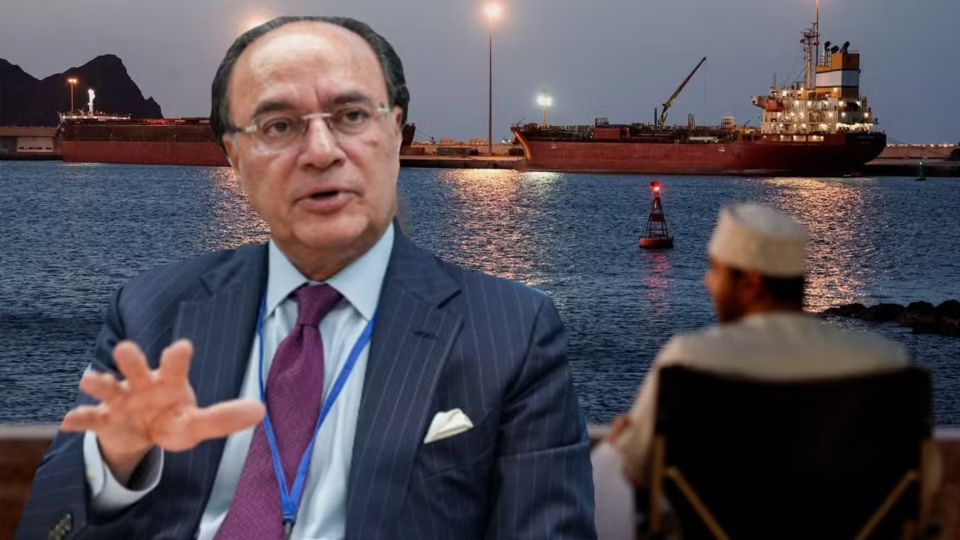
Finance Minister Warns US-Iran Conflict Could Affect Pakistan’s Economy
Pakistan’s economic outlook could face fresh challenges from the ongoing conflict between the United States and Iran, Finance Minister Muhammad Aurangzeb said on Monday.
Speaking at the “Partnerships That Power Progress” event organized by EXIM Bank in Islamabad, the finance minister said the government was working to move the economy from stabilization toward sustainable growth.
Aurangzeb said Pakistan’s economic growth could exceed 4 percent during the current fiscal year, but acknowledged that developments in the region could create additional pressure on inflation and gross domestic product (GDP).
Regional Tensions Create Economic Risks
The finance minister’s comments came amid heightened tensions in the Gulf and disruptions affecting the Strait of Hormuz, one of the world’s most important energy routes.
Any prolonged disruption to energy supplies could increase international oil and gas prices, potentially raising import costs for countries that rely heavily on energy imports.
For Pakistan, higher energy costs could affect inflation, transportation expenses and the overall cost of economic activity.
Aurangzeb said the country’s challenge was not only to achieve economic growth but also to ensure that the growth remained sustainable.
Government Focuses on Export-Led Growth
The finance minister said the government’s economic strategy is focused on export-led and private-sector-driven growth.
He highlighted several measures introduced through the latest federal budget, including a reduction in the super tax and the removal of advance tax measures intended to support businesses and exporters.
Aurangzeb also said exporters could access financing at a rate of 4.5 percent, compared with the central bank’s policy rate of 11.5 percent.
According to the minister, these measures are aimed at improving the competitiveness of Pakistani exporters and encouraging greater investment in the export sector.
EXIM Bank to Support Export Financing
Aurangzeb said Pakistan EXIM Bank would have an important role in providing export refinance and facilitating long-term financing under the latest budget measures.
He stressed the need for Pakistan to broaden its export base rather than relying on a limited number of products and markets.
The minister said diversification should cover both goods and services, as well as different international markets.
Pakistan’s ability to maintain economic growth, control inflation and strengthen exports could therefore depend partly on domestic reforms as well as developments in the international economy.
The government is continuing to monitor regional developments while focusing on economic stability, investment and expansion of the country’s export capacity.
