


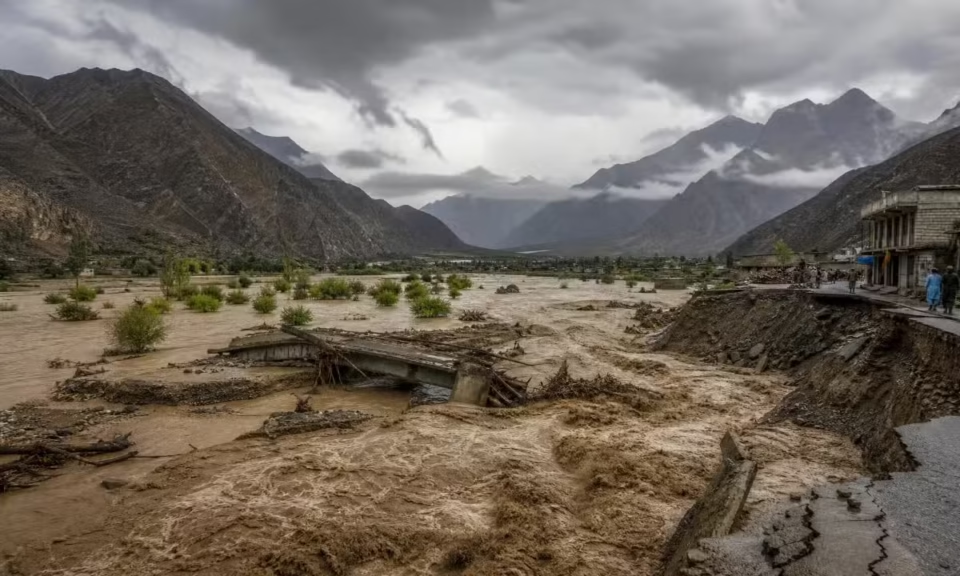
Flash Floods Damage Bridge and Crops in Mianwali
Heavy rain and flash floods from hill torrents have damaged infrastructure and agricultural land in Mianwali district, Punjab, disrupting road connectivity between several localities.
A section of the Chapri Bridge on Kot Chandana Road was washed away after floodwater from the Chachali hill torrent surged through the area following heavy rainfall in the northern hills of Mianwali.
Road Connectivity Disrupted
The damage has affected traffic between Chapri and Kot Chandana, Tola Mangli, Mohabbat Khel, Alf Khel and Janjuani.
Another bridge on the Chapri-Kamar Mashani Road, which was constructed in 2017, is also not operational due to incomplete work, including pending construction of shoulders and other required components.
The condition of the roads and bridges has created additional difficulties for residents travelling between nearby towns and villages.
Floodwater Damages Agricultural Land
The flash flooding has also caused breaches in the embankments of Nullah Adwala near Kamar Mashani, allowing water to enter surrounding agricultural areas.
Hundreds of kanals of standing crops have reportedly been inundated in Wandha Kamalzai and Wandha Nanzian Wala. Floodwater has also reached areas close to residential deras on the outskirts of Kamar Mashani.
Another breach was reported along the eastern embankment of Nullah Adwala at Kacha Barzi, where floodwater entered agricultural fields.
Farmers are concerned about losses to millet, maize and other crops because of the flooding.
Residents Seek Preventive Measures
Local residents and farmers said they had raised concerns about the condition of bridge shoulders, embankments and flood channels since last year. They alleged that timely repairs and preventive measures were not carried out.
Residents have called for urgent strengthening of bridge shoulders and embankments, as well as maintenance of flood channels.
They also urged authorities to remove accumulated silt and debris from hill torrent beds and areas beneath bridges to improve water flow and reduce the risk of similar flooding in the future.
