


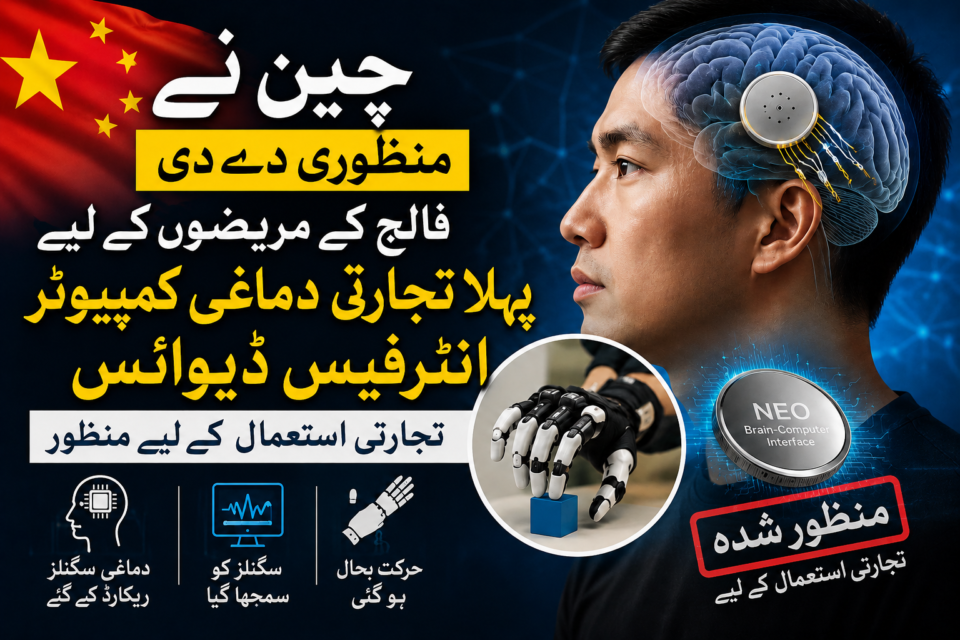
China Approves First Commercial Brain-Computer Interface Device for Paralysis Patients
China has approved the commercial use of a brain-computer interface (BCI) device designed to help patients with paralysis regain limited hand movement, marking a major development in neurotechnology.
The device, named NEO, was developed by Shanghai-based Neuracle Medical Technology with research support linked to Tsinghua University.
This approval makes China the first country to authorize an invasive brain-computer interface device for commercial medical use outside clinical trials.
Designed to Help Paralysis Patients
NEO is intended for patients suffering from paralysis caused by cervical spinal cord injuries.
The system works by detecting brain signals when a patient imagines moving their hand. These signals are then decoded and translated into commands that control an external assistive robotic glove.
This allows users to perform basic tasks such as grasping and holding objects, offering improved independence in daily activities.
Less Invasive Brain Implant Design
Unlike some other brain implant systems, NEO uses a less invasive approach.
The coin-sized implant is placed between the skull and the brain, resting on the dura mater (the protective outer layer of the brain). It uses multiple electrodes to capture movement-related brain signals, which are processed and converted into digital instructions.
This design avoids direct penetration of brain tissue, unlike some competing technologies currently in development.
Clinical Testing and Approval
China’s National Medical Products Administration approved the device after safety evaluations and clinical trials.
Early reports indicate that patients were able to control robotic gloves using brain signals, showing improvements in basic hand movement function during testing.
The device is approved for medically stable adults who meet specific eligibility criteria for spinal cord injuries.
Comparison with Other Global Projects
The approval places China ahead in commercial availability of brain-computer interface systems compared to other global efforts.
For example, Neuralink has begun human trials for its N1 implant, which allows users with paralysis to control digital devices using thought-based commands. However, it has not yet received full commercial approval from U.S. regulators.
Medical Potential and Concerns
Experts say brain-computer interfaces could transform treatment options for people with neurological conditions affecting movement and communication.
Researchers are also exploring future applications in stroke recovery, epilepsy, Parkinson’s disease, depression, and vision-related disorders.
However, experts also highlight important risks, including:
- Surgical complications such as infection or bleeding
- Long-term brain response to implants
- Data privacy and cybersecurity concerns
Because these devices collect neural signals, experts stress the need for strong safeguards to protect sensitive brain data.
China’s Growing Focus on BCI Technology
China has identified brain-computer interface technology as a strategic priority and is investing in both invasive and non-invasive systems.
The approval of NEO represents an early step in bringing such technology into real-world medical use, while other global companies continue research and clinical trials.
