


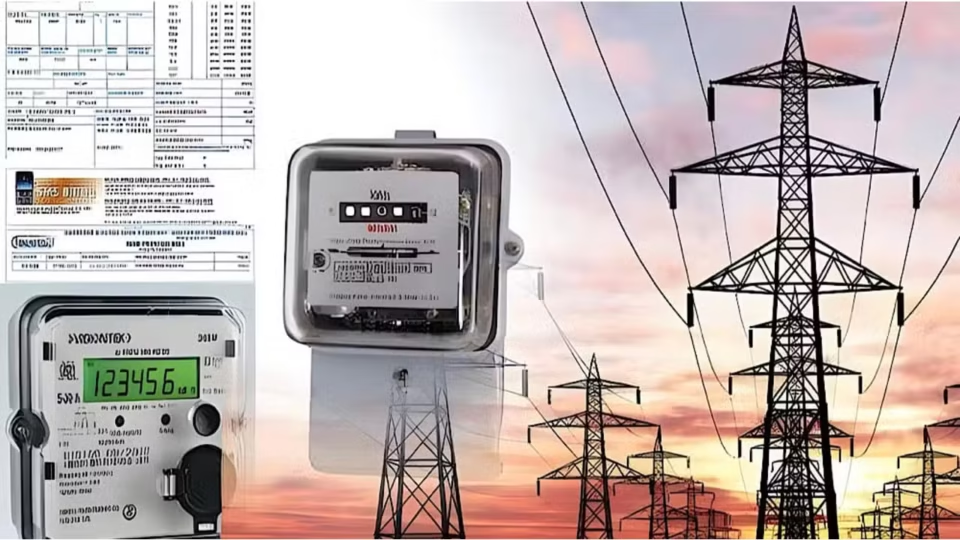
Government Collects Around Rs. 620 Billion Annually Through Taxes on Electricity Bills
The federal government collects approximately Rs. 620 billion each year through taxes included in electricity bills, officials informed the National Assembly’s Standing Committee on Finance and Revenue during a recent meeting.
According to representatives of the Federal Board of Revenue (FBR), the revenue is generated primarily through an 18 percent General Sales Tax (GST) on electricity consumption and withholding tax applied to eligible consumers based on their monthly bills.
Taxes Collected Through Utility Bills
Officials explained that the taxes are collected by electricity distribution companies and subsequently deposited with the FBR as part of the government’s revenue collection mechanism.
Electricity bills in Pakistan typically include several components in addition to the cost of electricity consumption. These may include fuel cost adjustments, electricity duty, applicable service charges, and other government-approved levies.
The briefing highlighted the significant contribution of utility-based tax collection to overall government revenues.
Committee Reviews Tax and Digital Reform Measures
During the meeting, the Standing Committee also reviewed various taxation and revenue-related initiatives.
Lawmakers approved the Retailers Fixed Tax Scheme, which is aimed at broadening the tax base and improving documentation within the retail sector.
Committee members were also briefed on the FBR’s upcoming National Faceless System, an AI-assisted digital platform designed to streamline tax administration and improve service delivery.
AI-Based Tax System to Launch in Phases
Officials informed the committee that the National Faceless System is expected to be introduced in phases beginning in October 2026.
The initiative is part of broader efforts to modernize tax administration through technology, enhance transparency, and improve compliance procedures for taxpayers.
The committee emphasized the importance of digital reforms and efficient revenue collection measures in supporting the country’s economic and fiscal objectives.
