


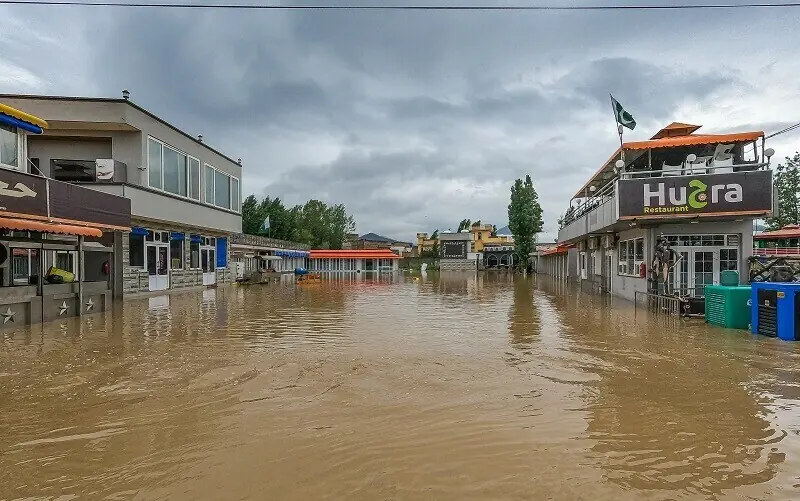
Swat Faces Growing Climate Challenges as Flood Risks Increase
Authorities have issued a Glacial Lake Outburst Flood (GLOF) alert for several northern districts of Khyber Pakhtunkhwa, including Swat, warning that rising temperatures could accelerate glacier and snowmelt, increasing the risk of flash floods, landslides, and high river flows.
Officials have advised communities living near rivers and streams to remain alert, monitor official weather updates, and follow precautionary measures where necessary.
Climate Change Increasing Flood Risks
Swat has experienced several major flood events over the past decade, with changing weather patterns and rapid glacier melt contributing to increased flood risks in mountain valleys.
Experts say climate change, combined with development in flood-prone areas, has made some communities more vulnerable to extreme weather events.
According to satellite-based assessments published through Space4Climate, supported by the Pakistan Space and Upper Atmosphere Research Commission (SUPARCO), urban development along parts of the Swat River has expanded significantly over recent years. The analysis indicates that construction in active floodplain areas may increase exposure to flood damage during periods of heavy rainfall.
Satellite Monitoring Supports Risk Assessment
Satellite imagery comparing conditions before and during the 2022 floods highlighted major changes in river channels and surrounding areas.
Researchers say continuous satellite monitoring helps authorities assess river behavior, identify vulnerable locations, and improve planning for disaster preparedness and climate resilience.
According to the Emergency Events Database (EM-DAT), Pakistan has experienced dozens of flood events over the past 25 years, with many causing significant impacts on communities, infrastructure, and agriculture.
Communities Continue to Adapt
Residents in Upper Swat have witnessed repeated flooding and other weather-related challenges since around 2010. These events have affected transportation, homes, businesses, and public infrastructure in several parts of the valley.
Local researchers and community representatives have also highlighted the broader social effects of recurring natural disasters, including displacement, changing settlement patterns, and the challenges faced by families rebuilding after repeated flood events.
They emphasize that long-term planning should consider not only physical infrastructure but also the needs of local communities living in mountain regions.
Focus on Long-Term Resilience
Experts say reducing future flood risks will require a combination of improved land-use planning, protection of natural river corridors, stronger early warning systems, and greater investment in climate resilience.
Authorities continue to encourage residents in vulnerable areas to stay informed through official advisories, avoid unnecessary travel near rivers during periods of heavy rainfall, and follow guidance issued by local disaster management agencies.
As weather patterns continue to evolve, officials and experts alike stress the importance of preparedness and sustainable planning to help reduce the impact of future climate-related events in Swat and other mountainous regions of Pakistan.
