


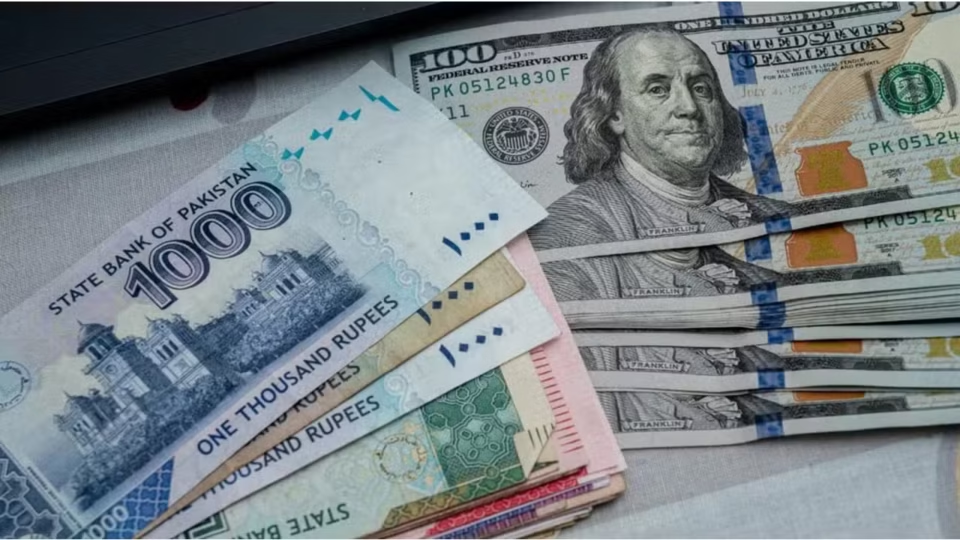
Pakistan Exporters Raise Concerns Over Strong Rupee, Call for Exchange Rate Review
Pakistan’s export sector has expressed concerns over the country’s exchange rate policy, arguing that a relatively strong rupee is affecting export competitiveness, foreign investment, and overall trade performance.
According to industry representatives, the rupee has appreciated by around Rs. 4 against the US dollar over the past 18 months, while several regional currencies, including those of India and Bangladesh, have weakened. Exporters say this has made Pakistani products more expensive in international markets and encouraged higher imports.
Trade Deficit Remains Under Pressure
The concerns come after Pakistan’s trade deficit reached $39 billion in FY2025-26, despite workers’ remittances hitting a record $41.5 billion.
Industry leaders believe increased imports, including higher vehicle imports, have reduced the positive impact of rising remittance inflows on the economy.
Exporters Seek Competitive Exchange Rate
Business representatives say production costs in Pakistan remain significantly higher than in competing markets, making it difficult for local manufacturers to compete globally.
They argue that a gradual and market-based adjustment in the exchange rate could improve export competitiveness and support long-term industrial growth.
Some economists have also highlighted Pakistan’s Real Effective Exchange Rate (REER), which has reportedly risen to 106.4. They note that a REER above 100 may indicate that the local currency is relatively strong compared to trading partners.
Industry Highlights Additional Challenges
Exporters also pointed to other factors affecting the manufacturing sector, including:
- High financing costs following the State Bank’s policy rate decision.
- Rising production expenses.
- Concerns over under-invoicing and smuggling impacting domestic industries.
While businesses have benefited from various government support measures, including subsidized financing, industry representatives believe additional policy reforms may be needed to strengthen exports and manufacturing.
They also questioned how Pakistan plans to increase exports to $60 billion and expand bilateral trade with the United States to $20 billion over the next five years without stronger growth in the industrial sector.
