


(Sports Correspondent: Imran Sohail)
Brazil’s “Hexa” Quest: Can They End 24 Years Without a World Cup Title in 2026?
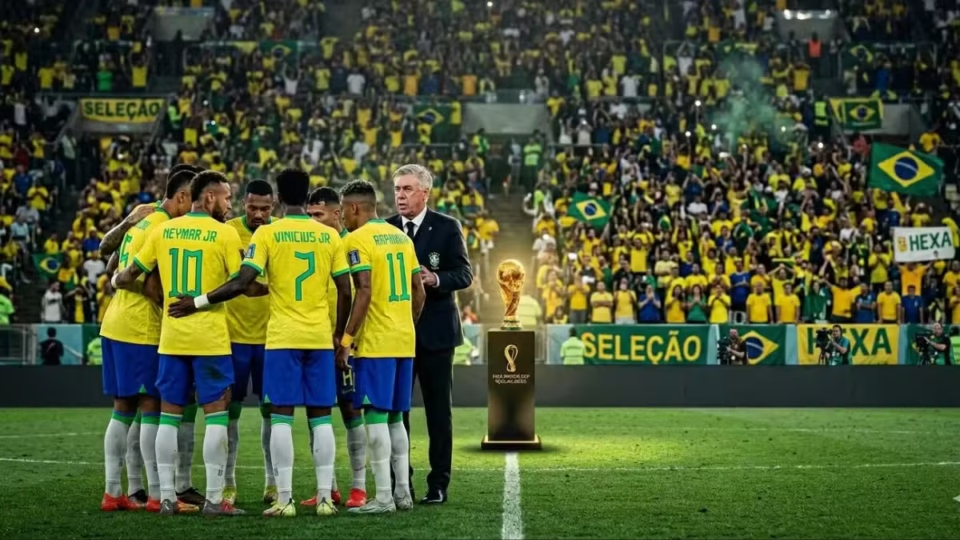
Brazil heads into the 2026 World Cup with one clear objective: winning a sixth title, known as the “Hexa.” However, the pressure of a 24-year wait has turned ambition into expectation, making this campaign one of the most scrutinized in recent memory.
A Team in Transition
Brazil’s current squad represents a significant generational shift. The team has moved away from its traditionally controlled, possession-heavy style toward a more direct and high-tempo approach.
This new identity emphasizes speed, athleticism, and quick transitions, allowing attacking players to operate with greater freedom in the final third. While this makes Brazil more dynamic, it also introduces unpredictability.
Tactical Approach Under Carlo Ancelotti
Under coach Carlo Ancelotti, Brazil has adopted a flexible tactical system built around rapid transitions and compact defensive structure.
A projected 4-2-3-1 setup could feature:
- Goalkeeper options: Alisson / Ederson
- Defense: Marquinhos, Gabriel Magalhães, and full-backs providing width
- Midfield: Casemiro and Bruno Guimarães
- Attack: Neymar or Paquetá centrally, supported by Vinícius Jr. and Raphinha on the wings
- Striker: Endrick
The system focuses on winning possession quickly and launching fast counter-attacks, while maintaining defensive discipline when out of possession.
Balancing Creativity and Structure
One of Brazil’s biggest challenges is finding the right balance between attacking freedom and defensive stability.
While attacking players are given creative license in advanced positions, defensive organization becomes vulnerable if the press is broken. This places significant responsibility on the midfield to control transitions and protect the back line.
Key Selection Challenges
Several tactical decisions remain crucial:
- Neymar’s role: Returning from injury at 34, his creative influence remains valuable, but his free movement can disrupt structure.
- Wing balance: Vinícius Jr. thrives with space on the left, requiring disciplined full-back support to avoid congestion.
- Defensive pairing: Brazil must choose between experience and pace in central defense to handle fast counter-attacks.
Emerging Talent
Brazil’s next generation is expected to play a key role:
- Endrick: A rising striker known for his pace, strength, and finishing ability
- Rayan: A dynamic wide forward offering direct attacking threat and unpredictability
These young players provide depth and tactical variation, especially in high-pressure knockout matches.
Challenges on the Road to Glory
Brazil’s qualification campaign highlighted both strengths and vulnerabilities, including inconsistent away performances and defensive lapses under pressure.
In the knockout stages, potential opponents such as France or Uruguay could exploit space behind Brazil’s attacking full-backs, especially if defensive transitions are not well managed.
Psychological Pressure and Expectations
Beyond tactics, Brazil’s biggest challenge may be mental. Past struggles in penalty shootouts and high-pressure matches continue to influence expectations.
Reliance on individual brilliance has sometimes disrupted team structure during crucial moments, making collective discipline essential.
Final Outlook
For Brazil, anything short of lifting the World Cup will be viewed as disappointment. The squad has the talent, depth, and tactical flexibility needed to compete at the highest level.
If Ancelotti successfully blends experience with youth and maintains balance between creativity and structure, Brazil could finally end its 24-year wait and secure a record sixth World Cup title in 2026.
