


Child Labor Remains a Concern in Islamabad, Rights Group Says
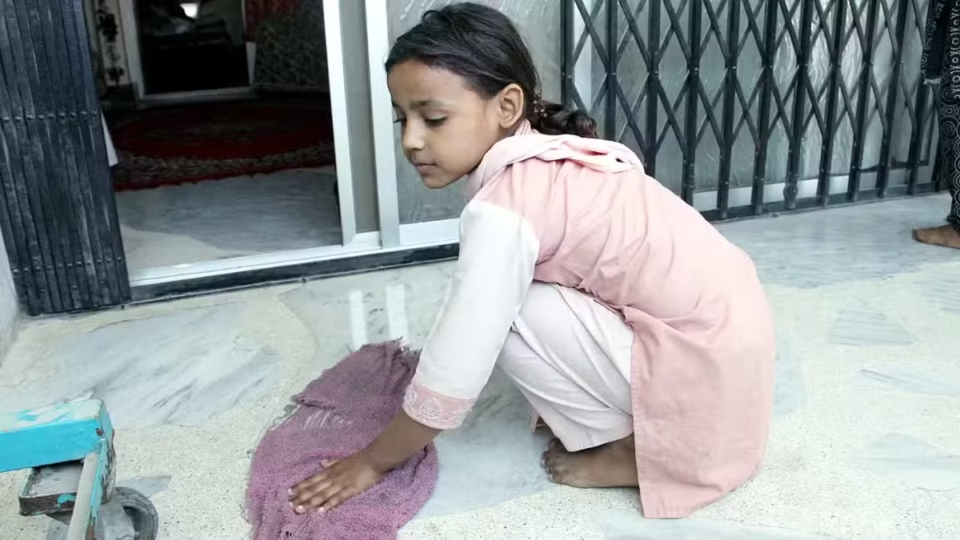
ISLAMABAD — Child rights advocates have called for stronger efforts to address child labor in the federal capital, highlighting concerns about the continued employment of children in domestic and other forms of work.
The issue was discussed during an event held to mark World Day Against Child Labour 2026, organized in collaboration with the National Commission on the Rights of the Child.
According to representatives of the Society for the Protection of the Rights of the Child (SPARC), child domestic labor remains a challenge despite legislation introduced in Islamabad in 2020 aimed at protecting children from such practices.
Need for Stronger Enforcement
Speakers at the event emphasized the importance of effective implementation of existing laws and greater awareness to help safeguard children’s rights.
They noted that child labor can be found in various sectors, including domestic work, workshops, manufacturing, and other informal industries, and stressed the need for coordinated efforts to address the issue.
Education and Social Protection
Participants also highlighted the connection between child labor and access to education. They pointed to the large number of children who remain out of school and stressed the importance of expanding educational opportunities and social support programs.
Experts said that reducing child labor requires a combination of stronger law enforcement, improved access to quality education, poverty reduction measures, and enhanced child protection systems.
Calls for Collective Action
Lawmakers, child rights advocates, and community representatives urged greater cooperation among government institutions, civil society organizations, and local communities to ensure children have access to education and a safe environment for growth and development.
Children participating in the event shared their experiences and emphasized the importance of equal educational opportunities and protection from exploitation.
Speakers concluded that long-term progress will depend on sustained efforts to improve educational access, strengthen child protection mechanisms, and support vulnerable families across the country.
