


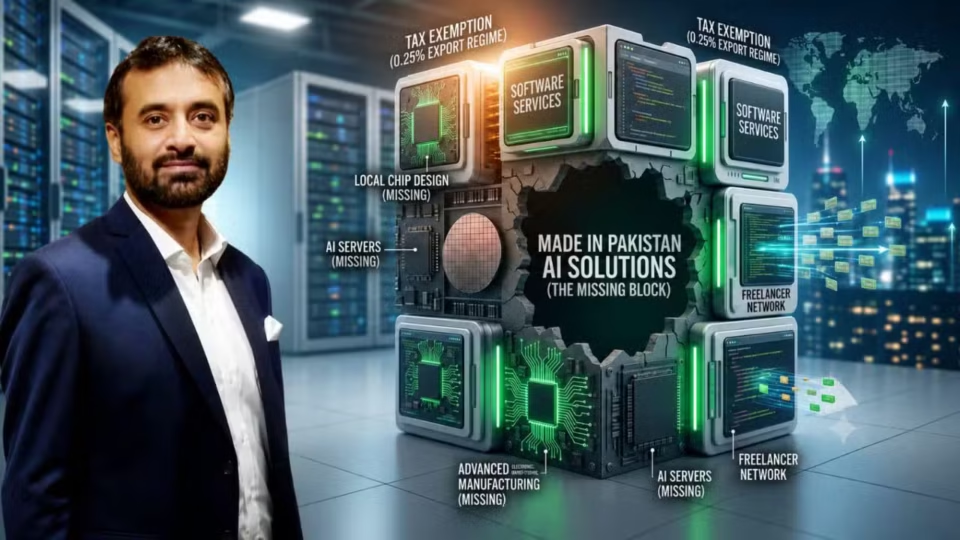
Budget 2026-27 Supports IT Exports, But Experts Call for Stronger Focus on “Made in Pakistan” AI Industry
Pakistan’s Federal Budget 2026-27 has introduced measures that support the country’s information technology sector, including the extension of a low tax regime for IT exporters for the next three years. The move is expected to provide stability for software companies, exporters, and freelancers operating in the digital economy.
Industry stakeholders have welcomed the decision, saying it offers continuity and confidence for businesses engaged in IT exports.
Focus Remains on IT Exports
The budget continues to prioritise growth in software exports and services, reflecting the government’s broader goal of strengthening Pakistan’s digital economy.
However, experts believe the policy could have gone further by encouraging development in advanced technology manufacturing and emerging sectors such as artificial intelligence (AI).
Call for Broader Technology Development
According to industry observers, global economies are increasingly investing in AI infrastructure, high-performance computing, robotics, and advanced electronics. In comparison, Pakistan’s current focus remains largely centred on software exports.
They argue that a more balanced approach is needed—one that also promotes local production of technology hardware, including computers, servers, AI systems, and data centre equipment.
Pakistan’s experience in mobile phone assembly is often cited as an example of how targeted policies can help develop local manufacturing capacity, generate employment, and reduce reliance on imports.
Opportunity in AI and Hardware Ecosystem
Experts say the future of artificial intelligence depends not only on software development but also on access to computing power, hardware infrastructure, and technical skills.
Without investment in these areas, Pakistan risks remaining primarily a consumer of advanced technologies rather than becoming a producer and exporter.
Industry Response
The technology sector has welcomed the continuation of the IT exporter tax regime, calling it a positive step for business stability. However, industry leaders stress the need for future policies that support innovation in AI, local manufacturing, and technology transfer.
According to industry representatives, Pakistan has the talent and potential to participate in the global AI economy if supported by the right policy environment.
