


Rising Heat Makes Date Harvesting More Difficult for Workers in Sindh
KHAIRPUR: Date workers in Sindh are facing increasingly difficult working conditions as high temperatures make harvesting and processing dates more challenging.
The date season begins in July, when temperatures across parts of Sindh can regularly rise to around 40°C or higher. In Khairpur, one of Pakistan’s major date-producing districts, labourers often begin their work during the early hours of the morning to avoid the most intense daytime heat.
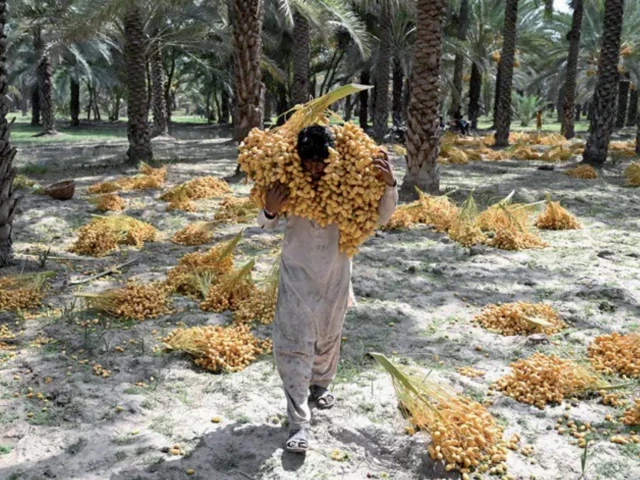
Workers involved in the harvest perform a range of physically demanding tasks, including collecting dates from palm trees, transporting the fruit and processing it in large containers over open fires.
Muhammad Idrees, who has been working during the date harvest for more than a decade, said the heat has become increasingly difficult to tolerate.
Speaking to AFP while temperatures reached 42°C, Idrees said workers now face much harsher conditions compared with previous years. He added that labourers sometimes become ill because of the intense heat.
Several workers said they experience problems such as weakness, fever, fainting and heat-related illness while working. Some seek medical treatment before returning to their jobs.
To reduce exposure to extreme temperatures, many workers start around 2am. They work in shifts and take breaks before continuing their duties later in the day.
Khairpur is one of Pakistan’s key date-producing areas and accounts for more than half of the country’s date production. The sector provides income to thousands of farmers and seasonal workers.
Idrees said he earns around Rs1,200 per day for the physically demanding work.
According to him, workers first harvest the dates and transport them to processing areas. The fruit is then boiled over open fires before being placed outside to dry under the sun.
Pakistan is among the countries considered highly vulnerable to the effects of climate change, despite contributing a relatively small share of global greenhouse gas emissions.
The country has experienced more frequent heatwaves, changing rainfall patterns and severe flooding in recent years. Sindh was among the areas badly affected by the devastating floods of 2022, which caused widespread damage and displaced millions of people across Pakistan.
Changing weather patterns are also affecting agriculture. Date farmer Shahnawaz Phulpoto, who owns more than 1,500 date palm trees, said heavier monsoon rains have affected crops and resulted in financial losses.
Pakistan is also one of the world’s major date producers and earns more than $120 million annually from date exports, according to industry estimates.
As temperatures continue to rise, farmers and seasonal workers in Sindh are increasingly facing the challenge of maintaining agricultural production while working in difficult and potentially hazardous heat.
