


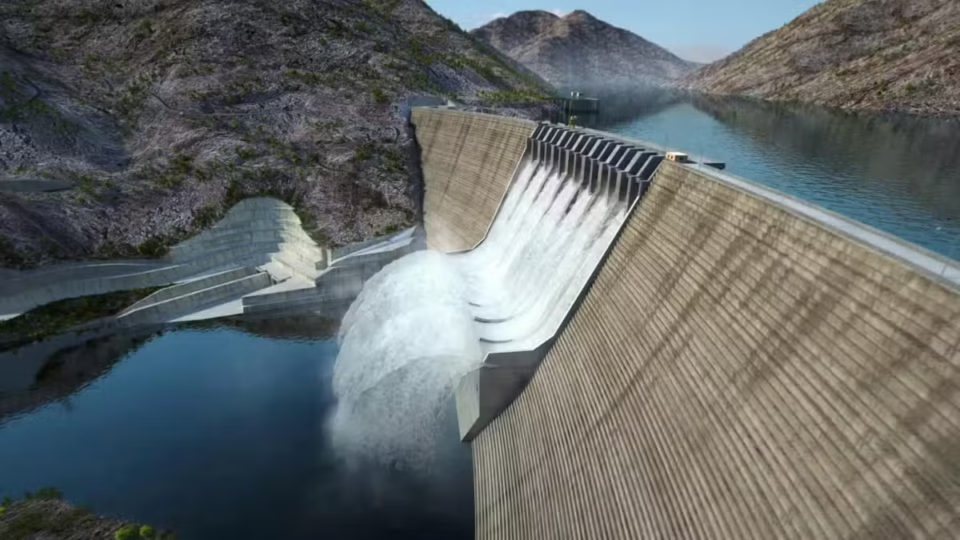
Pakistan Accelerates Work on Four Major Dams to Strengthen Water Storage Capacity
Pakistan has stepped up construction work on four major dam projects aimed at improving water storage, flood control, and energy generation capacity across the country.
According to official reports, the projects include Diamer-Bhasha Dam, Mohmand Dam, Kurram Tangi Dam, and Nai Gaj Dam. Collectively, these schemes are expected to significantly enhance the country’s water storage capacity once completed.
Major Storage Contribution from Key Projects
Among the ongoing developments, Diamer-Bhasha Dam is expected to contribute the largest share, with a planned storage capacity of approximately 6.4 million acre-feet.
Other projects include:
- Mohmand Dam: 0.676 million acre-feet
- Kurram Tangi Dam: 0.90 million acre-feet
- Nai Gaj Dam: 0.16 million acre-feet
Together, these projects are projected to add more than 8 million acre-feet of live storage capacity.
Addressing Growing Water Challenges
Authorities say the projects are part of a broader national strategy to improve water availability, manage seasonal floods, and support hydropower production.
Pakistan continues to face increasing pressure on its water resources due to changing rainfall patterns, glacier melt, and rising demand from agriculture and population growth.
Officials have emphasized that expanding storage capacity is essential for long-term water security.
Long-Term Water Development Plans
The Water and Power Development Authority (WAPDA) has described the current phase of infrastructure development as the “Decade of Dams,” highlighting accelerated efforts to complete key projects.
In addition to ongoing construction, several other reservoir projects are in planning and design stages, which could further increase national storage capacity in the future.
At present, Pakistan’s major operational reservoirs include Tarbela Dam, Mangla Dam, and Chashma Barrage.
Authorities are also upgrading monitoring systems to improve real-time data collection on river flows, rainfall, and reservoir levels to support better water management decisions.
