


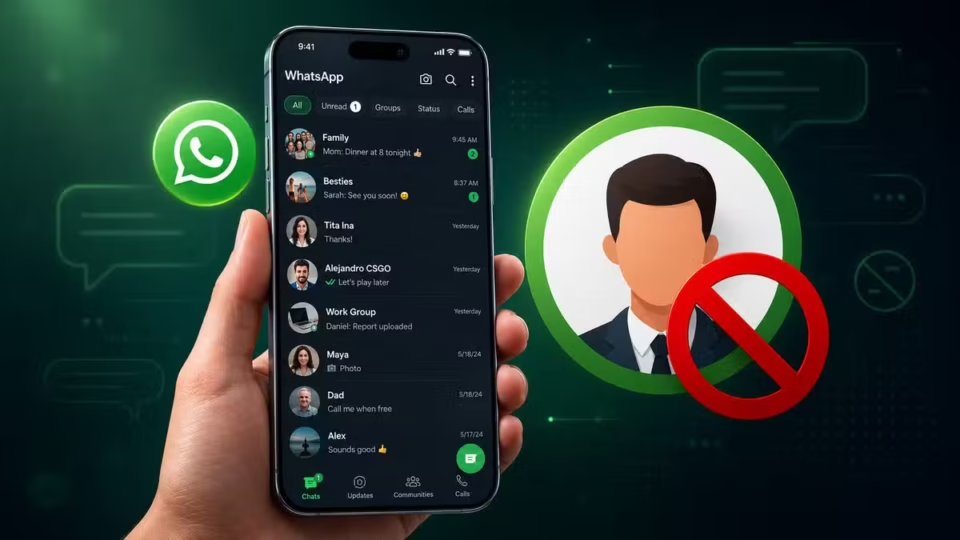
New WhatsApp Method Claims to Help Identify Possible Blocking
A new method circulating among WhatsApp users suggests a way to check whether someone may have blocked you, using the app’s built-in encryption verification feature.
While several traditional signs are already known—such as missing profile photos, undelivered messages, or failed calls—none of these indicators provide a definitive confirmation of being blocked.
How the New Method Works
The suggested approach involves WhatsApp’s encryption verification system, which is designed to ensure that conversations remain secure and end-to-end encrypted.
Each WhatsApp chat uses unique encryption keys, and these keys can change when a user switches devices, reinstalls the app, or adds a new device.
Users can access the feature by opening a chat, tapping the contact’s name, and selecting the “Encryption” option. WhatsApp then attempts to automatically verify that the conversation remains secure.
According to the method being shared online, if the verification completes successfully, it may indicate that the chat is functioning normally. However, if the system repeatedly fails to verify the encryption, some users believe it could be a possible sign that the contact has blocked them.
Important Limitations
It is important to note that WhatsApp has not confirmed this as an official way to detect blocking.
Verification failures can occur for several reasons, including poor internet connection, device changes, or temporary encryption updates. These technical issues can produce results similar to those seen when a user is blocked.
Because of this, the method should not be considered a reliable or conclusive indicator on its own.
Other Common Signs of Blocking
Users often rely on several indirect signs to determine whether they may have been blocked. These include messages showing a single check mark, inability to make calls, or missing profile updates.
However, these signs can also be caused by privacy settings or changes made by the contact, meaning they are not definitive proof of blocking.
Conclusion
While the encryption verification method has attracted attention as a potential indicator, it remains unofficial and unreliable. WhatsApp’s security system is designed for privacy and protection, not for detecting blocking status.
