


General Motors Expands Automation at Detroit EV Plant Amid Workforce Changes
General Motors has increased the use of automation at its Factory Zero electric vehicle facility in Detroit by installing around 50 robotic arms as part of its ongoing production upgrades.
The development comes as approximately 1,300 workers remain on temporary layoff status following earlier workforce adjustments at the plant.
Automation in Production
The newly installed robotic systems, developed by Japanese automation company FANUC, are designed to assist with assembly-line tasks, including the installation of vehicle components during production.
Automotive manufacturers globally are increasingly adopting robotics to improve efficiency, consistency and production speed in electric vehicle manufacturing.
Workforce Situation
According to union representatives, a significant number of workers affected by earlier layoffs have not yet been recalled. The United Auto Workers (UAW) has expressed concern about the timing of increased automation while employees remain out of work.
Union officials have suggested that some of the affected workers could potentially be reintegrated into production roles.
Industry-Wide Trend
The use of robotics in automotive manufacturing is growing across multiple companies. Automakers such as Ford and Stellantis have also expanded their use of automated systems in production facilities.
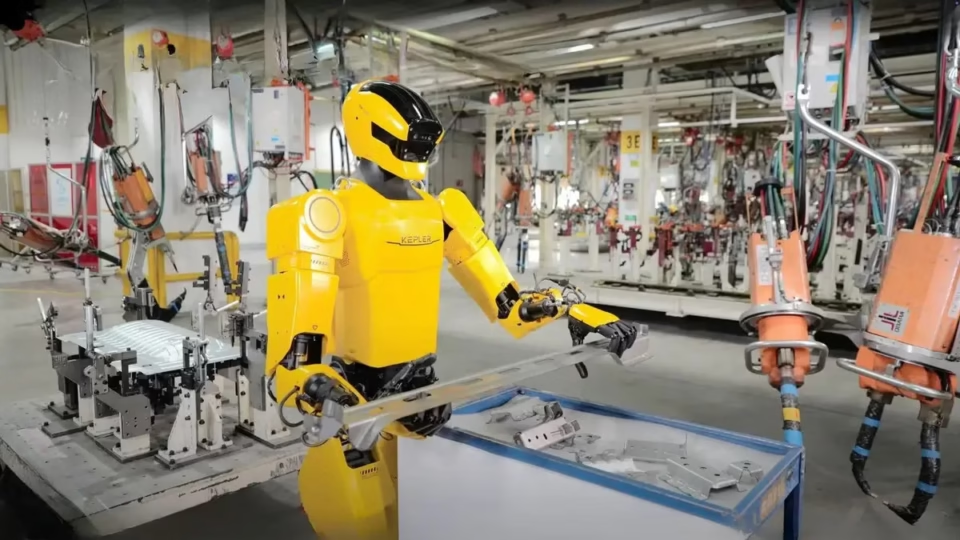
Other companies are exploring advanced robotics, including humanoid systems, as part of future factory operations.
Ongoing Debate
While automation is being introduced to improve efficiency and safety in manufacturing, it has also raised discussions about its impact on employment and the future role of human workers in production environments.
Industry observers note that automation continues to reshape modern manufacturing, particularly in the electric vehicle sector, where production technologies are rapidly evolving.
